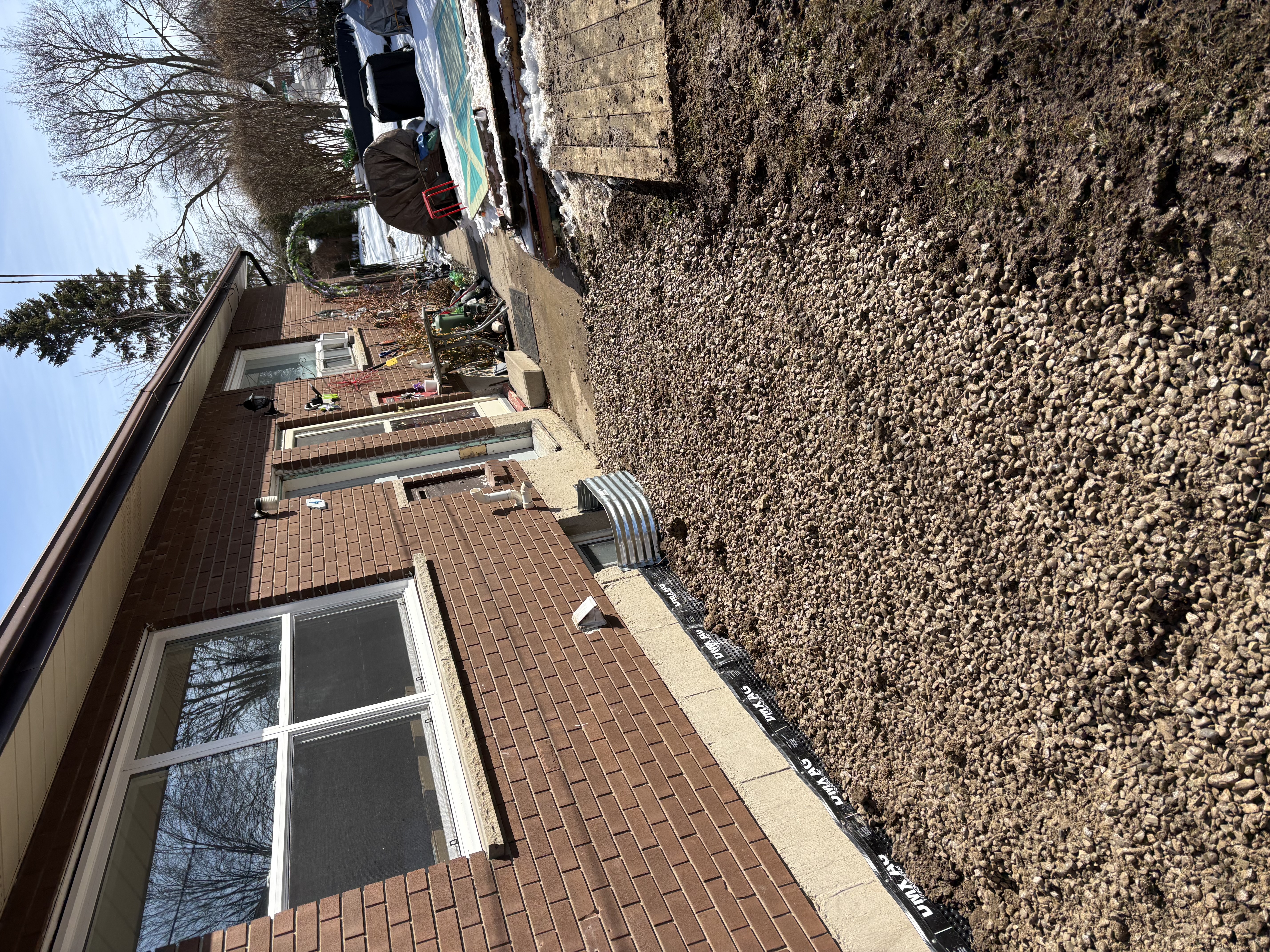
Basement floods only in heavy rain? This London, Ontario homeowner guide helps you sort out surface water, sump pump trouble, connected weeping tiles, and a blocked sanitary lateral before you spend money on the wrong repair.
Why does my basement flood only when it rains in London, Ontario? A homeowner's checklist
There is a particular kind of worry that comes with water in a basement.
It is not always the amount of water. Sometimes it is a thin line along the wall behind a storage shelf. Sometimes it is a floor drain making a noise you have never heard before. Sometimes it is the realization that the weather forecast now feels personal because every hard rain sends you downstairs to check the carpet, the furnace room, or the laundry area.
Most homeowners do the same thing first. They look for the obvious culprit. A crack in the wall. A bad window. A tired sump pump. A neighbour whose yard seems to drain in the wrong direction.
Those are reasonable places to start. But rain-only basement flooding can have more than one cause, and the wrong explanation can send you into an expensive repair that does not solve the problem. The wall may be dry while the floor drain backs up. The sump may be running while water is really coming from a blocked sanitary lateral. The puddle in the yard may be a grading issue, or it may be part of a much bigger drainage pattern.
The City of London identifies four common ways a basement can flood: weeping tiles or downspouts connected to the sanitary sewer, a malfunctioning sump pump, surface water, and a full City sanitary sewer or blocked sanitary lateral.[1] That is a better starting point than panic, a bucket, and a guess.
This guide is for the homeowner who wants to understand what they are seeing before they spend money, file a claim, or accept a big repair quote. It will not diagnose your house through a screen. It will help you ask better questions and know when the issue needs immediate attention.
Stay safe first. If floodwater has touched outlets, baseboard heaters, a furnace, or an electrical panel, do not enter the basement. Contact London Hydro's emergency line before cleanup. If water is coming up through a drain or looks like wastewater, stop using water in the house and report the flooding to the City of London.[1]
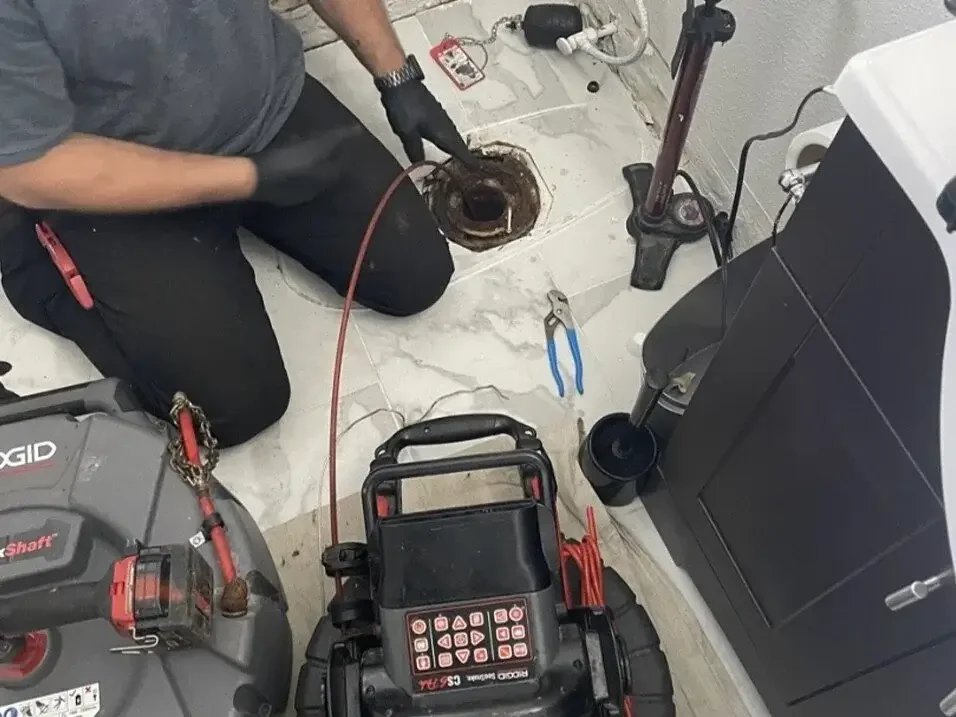
A sewer camera inspection can show whether a blocked sanitary lateral is part of recurring basement flooding after heavy rain in London, Ontario.
Begin with the pattern, not the puddle
When you are dealing with a wet basement, it is tempting to focus on the place where water is easiest to see. That does not always tell you where it started.
Think back to the first ten minutes. Was rainwater visibly tracking down a wall? Did the sump pit fill quickly? Did the washing machine empty just before the floor drain bubbled? Were toilets, showers, or sinks slow earlier in the day? Did the neighbour mention water on their street too?
Those details matter because surface water, groundwater, and wastewater do not behave the same way.
| What you are seeing |
What it may point to |
What to do next |
| Water enters near a window, wall crack, door, or stairwell |
Surface water, drainage, grading, or window-well issue |
Photograph the entry point and inspect the exterior water path after the storm. |
| The sump pit rises, the pump is silent, or it runs constantly without lowering the water |
Sump pump, float, discharge pipe, power, or backup-power issue |
Check the safe, obvious items first. Call for help if the pit is rising. |
| Water rises through a floor drain, basement shower, laundry sink, or toilet |
Sanitary backup or a blocked sewer lateral |
Stop using water, report the flood to the City, and arrange an assessment. |
| Several drains are slow, fixtures gurgle, or there is a sewer smell |
A restriction in the shared drain path or sewer lateral |
A camera inspection is more useful than another guess. |
| The yard stays wet long after the rain, especially in a strip toward the street |
Surface drainage, a broken drain connection, or possibly a buried-line issue |
Take photos over several dry days and note whether indoor drains are acting up. |
One symptom can be ordinary. A slow bathroom sink is often hair and soap. A damp corner can come from humidity. The concern rises when several parts of the home start telling the same story.
1. Water near the wall: rain is getting to the foundation
Clear water near a wall, window, walkout, or exterior door usually sends you toward surface drainage first. That is not a dismissal. A wet basement wall needs attention. It just means the sewer line is not the first suspect.
In London, hard rain can temporarily pond in yards and around catchbasins. The City notes that a local storm can affect one street or a few homes without causing trouble city-wide.[2] A temporary puddle is different from water that keeps climbing toward the foundation or comes inside at the same spot every time.
Once it is safe to be outside, look at the route water takes. You are not trying to become a drainage engineer in rubber boots. You are looking for the simple things that become obvious during rain and disappear by the next dry afternoon.
Does a downspout empty beside the house? Is the extension missing? Does a patio lean toward the foundation? Is a window well full of leaves? Did a new fence, shed, garden bed, or walkway block a shallow swale that used to carry runoff away?
The City asks homeowners to direct downspouts on the surface and at least two metres, or six feet, away from the foundation. It also warns against blocking overland flow routes or swales with landscaping and hard surfaces.[2] That advice sounds basic because it is basic. It is also the sort of thing that gets missed after a few small renovations over ten or fifteen years.
If the water is entering from outside, start with our guide to wet basement causes in Ontario and consider a wet basement repair assessment when the water path needs a site-specific plan. If a floor drain is bubbling while the wall is dry, the next section may fit better.
2. A sump pump that fails only when you need it most
The sump pump spends most of its time being ignored. That is normal. It is tucked into a pit, the lid gets covered by a shelf or a laundry basket, and nobody gives it much thought until rain starts falling hard.
Then the pump becomes the only thing standing between groundwater and your basement floor.
If the pit is high, listen before you touch anything. Is the pump humming? Is it silent? Is it cycling on and off every few seconds? Can you see water moving through the discharge outside? A pump that is running but not reducing the water level may have a blocked or frozen discharge line, a stuck check valve, or a problem with the pump itself. A silent pump may have lost power, tripped a breaker, or had its float catch on the pit wall.
Do not stand in water to investigate powered equipment. If you suspect floodwater has reached electrical equipment, follow the City's safety directions and get the power situation sorted first.[1]
There is a practical lesson here for every homeowner with a finished basement: test the sump system before the storm, not halfway through it. Check the outlet. Make sure the discharge sends water away from the house. Know whether you have battery backup, and do not assume the battery is healthy because it was there last year.
The City of London's Basement Flooding Grant Program may help eligible owners with specific protection measures, including a new sump pit and pump, a battery backup installed with a new sump pump, and qualifying backwater-valve work. The program has caps and eligibility rules. It does not cover every repair that happens to involve a wet basement.[3]
3. In older London homes, rain can end up in the sanitary system
This is the part that surprises people.
The City estimates that about 50,000 London homes have weeping tiles directly connected to the sanitary sewer. Homes built before the 1990s may have this arrangement.[4] Weeping tiles are the perforated pipes around a foundation that collect groundwater. Their job is to take pressure off the basement wall.
In older construction, that water may have been directed to the sanitary sewer. During a hard rain, the system is then carrying more than toilets, sinks, and washing machines. It is carrying groundwater too. That can add stress to a system that was never meant to take every drop that lands around the house.
This does not mean every older London home is a flood waiting to happen. It means recurring rain-only flooding should not be waved away as "just an old house." There may be a straightforward explanation. There may be a grant-eligible project. There may be a separate lateral issue sitting behind it. You need to know which before you start spending money.
Useful clues include an older home with no visible sump discharge, a history of flooding after storms, old paperwork about a backwater valve or sump project, or a floor drain that reacts when rain is heavy. A contractor can assess the drainage setup, and City Sewer Engineering can explain program requirements if you are considering eligible work.
If you are looking at an older home before you buy, the question is worth asking before you waive conditions. Our pre-purchase sewer inspection guide explains what a standard home inspection usually cannot see below ground.
4. Water coming up through a drain is a different kind of warning
When water appears at the lowest plumbing fixture in the house, slow down and pay attention. A basement floor drain, laundry sink, shower, or toilet is part of the sanitary drainage system. If water is coming up through one of those openings, you may be dealing with a problem in the path that carries wastewater away.
That does not prove the City main has failed. It does not prove your entire sewer line has collapsed either. But it does change the next call.
Look for the pattern around it. A toilet flush that makes the basement shower gurgle. A washing machine that triggers bubbling at the floor drain. Two or three fixtures that drain slowly around the same time. A smell that gets stronger after water use. These signs suggest that water and air are struggling to move through a shared route.
Rain can expose a restriction that has been building for a long time. Roots did not suddenly enter the pipe during one storm. A clay joint did not necessarily separate that afternoon. The pipe may have been getting by during ordinary use, then heavy rain, groundwater connections, and a busy household pushed it past the point where it could keep up.
The City lists roots, grease, wipes, objects, pipe collapse, and obstructions among the reasons sanitary laterals become blocked.[4] If you live in an older neighbourhood with mature trees, it is worth treating recurring drainage trouble as information, not bad luck.
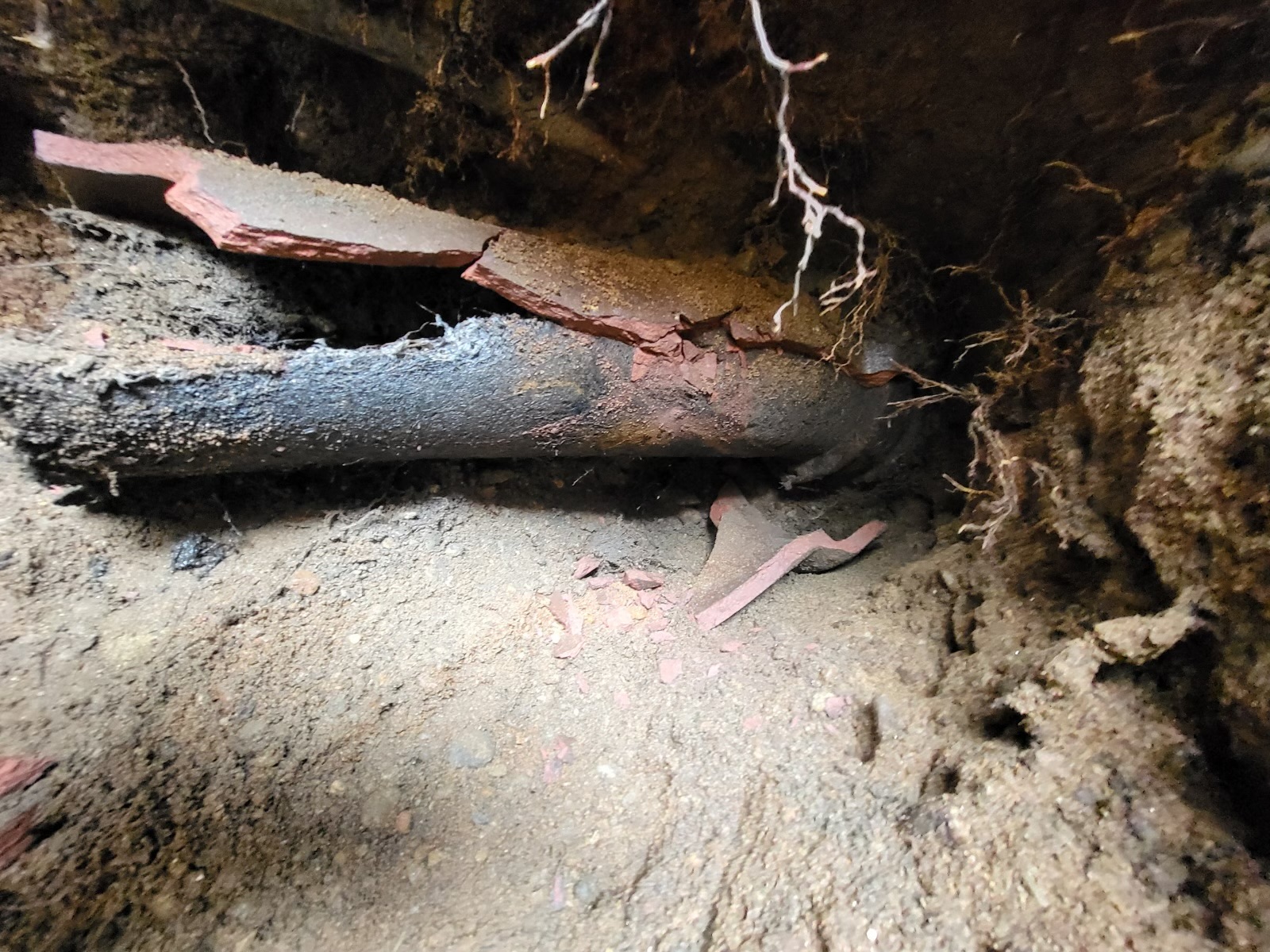
A camera can reveal roots, broken joints, offsets, and a collapsed sewer line before a contractor recommends a repair for a London, Ontario home.
What to do if the basement floor drain backs up during rain
Stop unnecessary water use. That means no laundry, no dishwasher, no shower, and no flushing another toilet to see whether the problem gets worse. Keep children and pets away from any water that may contain sewage.
Take a few photos or a short video from a safe distance. You are not creating a documentary. You are preserving the details that disappear after cleanup. If the City main is involved, report the flooding so staff can check the public system. The City lists 519-661-4570 during business hours and 519-661-4965 after hours.[1]
If the public main is operating normally, a qualified drain contractor can inspect the private side. For what to do in the first day, including cleanup and insurance documentation, see Sewer Backup: What to Do in the First 24 Hours.
5. In London, the pipe location changes who needs to act
There is a frustrating detail in London that homeowners often learn only after there is a problem.
The City is responsible for the main sewer in the roadway. The homeowner is financially responsible for the full sanitary lateral serving the home, including the building sewer on private property and the Private Drain Connection, or PDC, that runs from the property line toward the City main.[4]
That does not mean you should skip the City call. You should report basement or yard flooding. The City can determine whether its main is functioning as designed. If it is, the next step is finding out what is happening in the lateral that serves your home.
The point is not to turn a flood into an argument about whose problem it is before the water is even cleaned up. The point is to make sure you are not paying for the wrong diagnosis.
A camera inspection can show where the issue sits and what the pipe looks like. It can show roots at a joint, a low area where water holds, a separated section, a partial blockage, or damage that needs more than cleaning. Read Who Is Responsible for Your Sewer Line in London, Ontario? for the full PDC explanation.
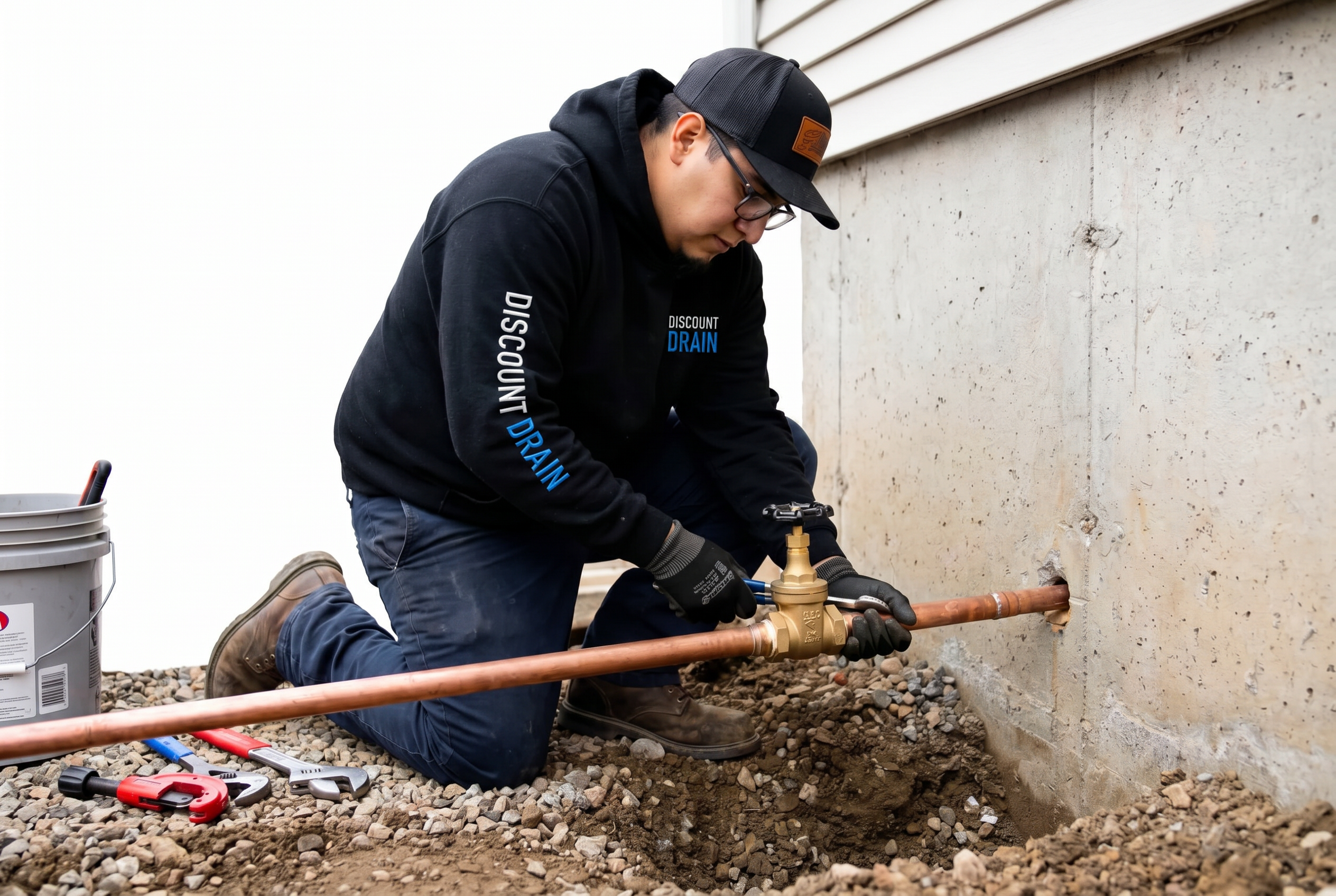
A camera-first diagnosis shows the condition and location of a sewer lateral before a London homeowner is asked to choose a repair.
6. The camera is where the guessing stops
People are understandably cautious when a contractor says the words "sewer repair." They have heard stories about lawns being dug up, driveways being cut, and costs that keep changing. The suspicion is not irrational. Underground work becomes expensive when nobody has bothered to look underground.
A useful camera inspection should answer simple questions in plain language.
Can the camera pass through the line? Is there a blockage? Is it roots, grease, a broken joint, an offset, a low spot, or a collapse? Where is the issue? Is it in the building sewer, at the PDC, or near the City main? Is the pipe sound enough for cleaning or lining, or does a section need repair or replacement?
If someone recommends a large job, ask to see the footage. You do not need to become an expert in pipe conditions. You deserve to see the evidence the recommendation is based on.
The repair should match the pipe. A line that is still broadly sound may be cleared and may be a candidate for trenchless pipe repair. A crushed line or a serious slope issue may need sewer repair and installation. There are also cases where a short spot repair makes more sense than either full lining or full replacement.
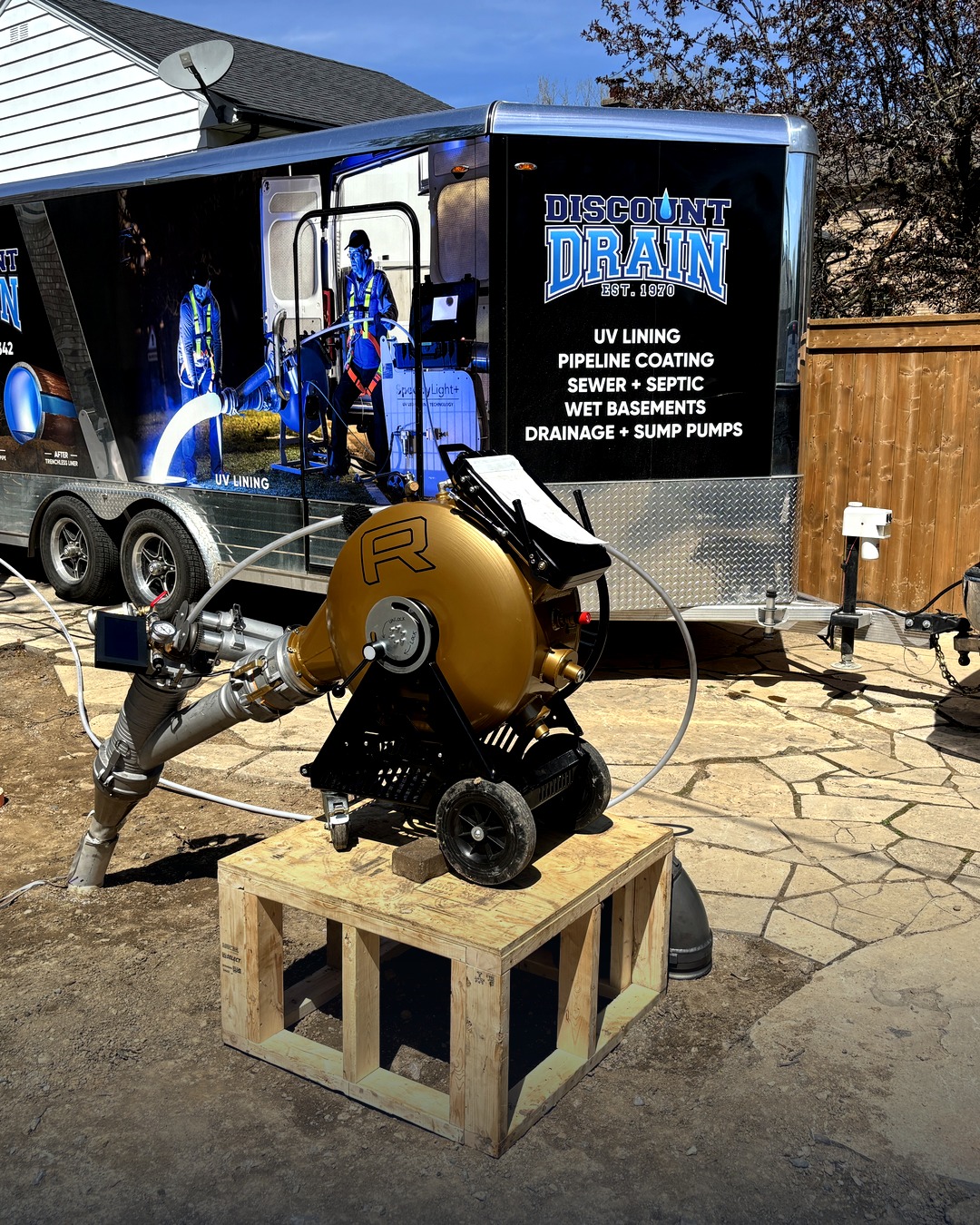
Repair options come after the camera diagnosis. For the right damaged sewer lateral, trenchless repair can reduce excavation at a London, Ontario home.
For a closer look at those choices, read Sewer Lining vs. Sewer Replacement in London, Ontario.
7. A simple pre-storm check is worth ten quiet minutes
Nobody wants another chore before a storm. Still, ten minutes is a better trade than discovering a missing downspout extension at eleven o'clock at night with rain coming down sideways.
Walk the perimeter of the house. Check that downspouts are connected and directing water away from the foundation. Look at the sump pit if you have one. Keep the floor drain visible. Move cardboard boxes, photo albums, and anything that cannot get wet off the basement floor. If you have a backwater valve, make sure it is maintained according to the manufacturer's instructions. If it closes during a sewer backup, read our guide to using toilets and appliances while a backwater valve is engaged.
If you have had a line cleared twice, keep hearing gurgling, have mature trees close to the sewer route, or have never had a camera down an older lateral, consider scheduling an inspection before an emergency makes the decision for you. A free sewer video camera inspection can give you a record of the pipe's condition and a more informed conversation about next steps.
The goal is not to worry yourself into a repair. The goal is to notice a problem while you still have options.
8. Call your insurer early, but do not assume the answer
When water gets into a basement, insurance becomes part of the conversation quickly. It should. But insurance coverage for sewer backup, overland water, and a failed underground service line can be different, even when all three are connected to the same event.
If you may be making a claim, call your insurer or broker early. Ask what coverage you carry, what deductible applies, and what documentation is needed. Save photos, video, invoices, and the camera report. Do not assume a pipe repair is covered because cleanup is covered, or the other way around.
Our guide, Does Home Insurance Cover a Sewer Backup or Collapsed Pipe in London, Ontario?, explains the distinction between sewer-backup damage and service-line coverage without pretending to know the details of your individual policy.
Frequently asked questions
Why does my basement flood only when it rains?
Rain-only flooding usually points to surface water, the sump system, older foundation drainage connected to the sanitary system, or a sanitary lateral that cannot handle the added stress. Where water appears and whether fixtures are reacting at the same time are the most useful first clues.
Can heavy rain cause a sewer backup in a basement?
Yes. Heavy rain can place more demand on drainage systems and expose a blocked or damaged lateral. Water rising through a floor drain, basement shower, laundry sink, or toilet needs prompt attention, especially when it is accompanied by gurgling, sewage odour, or several slow fixtures.
Is water coming up through my floor drain always a City sewer problem?
No. The City should inspect its main when flooding is reported. If the main is operating normally, the issue may be in the private sanitary lateral that serves the home. In London, homeowners are responsible for that lateral, including the PDC.[4]
How do I know if my sump pump is causing basement flooding?
Check whether the pit is high, whether the pump has power, whether it runs, and whether water is leaving through the discharge line. Do not investigate powered equipment while standing in water or where electrical equipment may have been contacted.
Should I get a sewer camera inspection after my basement floods?
If water came through a sanitary drain, several fixtures were slow or gurgling, or the same issue has returned after previous cleaning, a camera inspection can help identify the condition and location of the problem. It is also useful evidence before choosing a major repair.
Does a backwater valve stop all basement flooding?
No. A backwater valve can help prevent sewage from flowing backward into the home in the right situation. It does not fix grading, window wells, surface water, a failing sump pump, or every problem in a private lateral. A diagnosis should come first.
Take the next step that fits what you found
If water keeps showing up after rain, you do not need to solve the whole property in one weekend. Start with the water path. Clear water at the wall calls for an exterior drainage look. A rising sump pit calls for a sump-system check. Water coming up through a floor drain calls for a City report and a close look at the sanitary lateral.
If you are seeing slow drains, gurgling fixtures, sewage odour, or a recurring backup alongside rain-related flooding, call Discount Drain at 519-451-8342 or request a free quote. We will inspect the line, show you what the camera sees, and explain the practical options for your home.
Sources
[1] City of London: Flooding
[2] City of London: Stormwater
[3] City of London: Basement Flooding Grant Program
[4] City of London: Sewers and wastewater