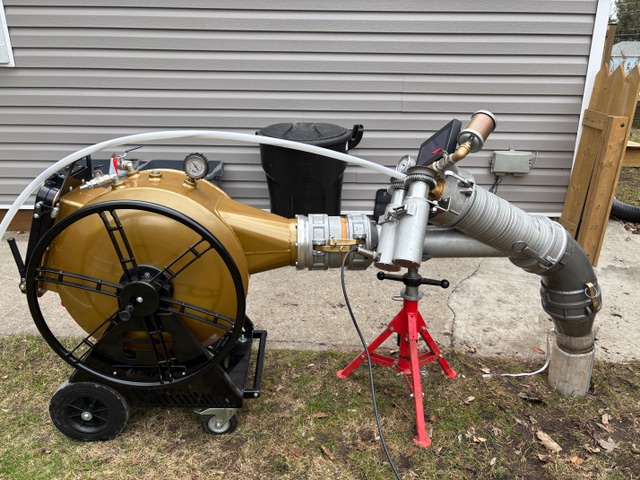
Is sewer lining cheaper than replacement in London, Ontario? The honest answer depends on your camera footage, pipe slope, property access, and Private Drain Connection. Here is how to choose between CIPP lining, excavation, replacement, or a hybrid repair without paying for the wrong solution.
You have a sewer camera video on a phone or laptop. The technician has said words like "roots," "offset," "belly," or "collapse." Then the quotes arrive. One company wants to line the pipe. Another wants to excavate and replace it. The prices may be closer than you expected. The explanations may not be.
That is where people get stuck.
The straight answer is this: lining is often the better choice when the existing sewer pipe is damaged but still open, passable, and sitting at the right slope. Replacement is often the better choice when the pipe is crushed, badly displaced, holding water because of a serious sag, or needs to be rerouted. There is also a third answer that gets ignored too often: repair the worst section and line the rest.
The camera decides. The sales pitch should not.
For London homeowners, this decision matters even more because the pipe running from the house to the city main is usually a Private Drain Connection, or PDC. That means the repair method, the location of the damage, and the work on city property can all affect the final bill. Read the full PDC responsibility guide.
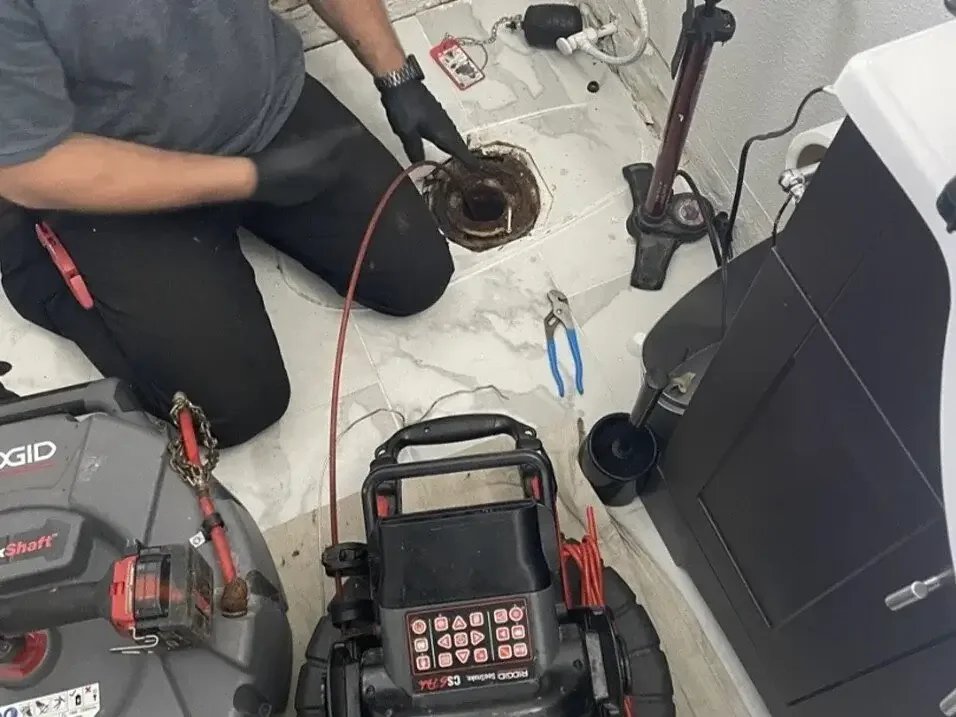
A camera inspection should come before a lining recommendation or an excavation quote. It shows what is actually inside the pipe.
The quick answer: what the camera needs to show
Here is a practical way to think about it before getting buried in technical terms.
| If the camera shows this |
The conversation should usually start with |
Why |
| Roots at joints, cracks, corrosion, scaling, or small leaks in a pipe that is still open and passable |
Trenchless pipe lining |
A liner can form a new, jointless pipe inside the old route without opening the entire yard. |
| One short failed section in an otherwise sound line, especially where access is easy |
A targeted spot repair |
It may cost less than lining or replacing the full run. |
| A pipe that is crushed, fully collapsed, or blocked so equipment cannot get through |
Excavation and replacement, or a hybrid repair |
A liner needs a path. If the line cannot be cleaned and passed, the damaged section has to be opened first. |
| A major belly, poor slope, or a line that needs a different route |
Excavation and replacement |
Lining follows the existing route. It does not lift a sagging pipe or redesign the grade. |
| Severe offsets or widespread structural failure |
Replacement, pipe bursting, or a hybrid plan |
The right answer depends on whether the system can be safely cleaned, lined, or pulled through. |
| A service line below a driveway, patio, finished basement, or mature landscaping that remains passable |
Lining should be priced alongside replacement |
Surface restoration can change the whole cost comparison. |
This table is not a diagnosis. It is a way to keep the conversation honest. A qualified contractor should show you the footage, identify the damaged section by location, and explain why a method fits that specific pipe.
What sewer lining actually does
Sewer lining, often called CIPP or cured-in-place pipe, creates a new pipe within the old one. A resin-saturated liner is installed through an access point, expanded against the existing pipe, and cured. The result is a smooth, jointless interior.
For an older London home with clay tile joints full of roots, or a cast-iron line with cracks and corrosion, that can be a very good answer. It keeps the repair inside the existing path. It can spare a driveway, flower beds, mature trees, or a finished basement from a long trench.
It is also important to understand what lining does not do. It does not straighten a pipe that settled into a serious low spot. It does not change the route. It does not make a fully collapsed section passable by force. NASSCO, the North American organization that publishes trenchless rehabilitation guidance, says CIPP installation requires a pipe clear of obstructions, crushed or collapsed sections, and major reductions in cross-sectional area. It also notes that the existing line and grade remain after installation.[1]
That last point matters. If the sewer has a real belly, a section where water and waste are sitting because the pipe dropped, a liner can follow that same low point. It may seal leaks, but it does not make gravity work differently. If the slope is the problem, replacement is usually the conversation you need to have.
When lining is the sensible choice
Lining tends to make the most sense when the existing pipe has enough shape left to act as a host for the new liner. A camera may show root intrusion at clay joints, longitudinal cracks, corrosion, scaling, small holes, or old sections that are ugly but still broadly round and continuous.
This is where a homeowner should slow down and look at the whole property, not just the plumbing number on the quote. Is the pipe under a concrete driveway? Does it run beneath a deck, a stone patio, a pool surround, or a finished part of the house? Would a trench cut through a yard you just paid to landscape? Those costs do not disappear because the sewer repair quote looks lower on paper.
Lining can also make sense when a line is deep or hard to reach. Digging a short, shallow line in open lawn is one thing. Digging a deep line beneath a driveway or sidewalk is another. The camera does not make the decision alone. Access and restoration matter just as much.
For a closer look at how the process works, see our trenchless pipe repair service page. The key point is simple: the right candidate is a damaged pipe that can still be cleaned, inspected, and used as the pathway for a new liner.
Is sewer lining cheaper than replacement in London, Ontario?
Sometimes. Not always.
The first quote can be misleading because pipe lining and excavation put different costs in different places. Lining can carry a higher material and specialized-installation cost, yet it can avoid the price of opening and restoring a driveway, patio, finished basement, landscaping, sidewalk, or other difficult surface. Replacement can be the lower-cost option when the failed run is short, shallow, easy to reach, and located in open lawn.
For a London homeowner, the practical comparison is the all-in cost, not the number beside the repair method. Ask whether the estimate includes locating the defect, camera work, cleaning, access pits, permits, municipal coordination, concrete or asphalt restoration, sod, cleanup, and a final camera review. If a Private Drain Connection reaches city property, factor in the City process before treating a private contractor's price as the whole project. Our sewer repair cost guide for London explains the main variables that move a quote up or down.
When is sewer pipe replacement better than lining?
Nobody wants to hear that their yard needs to be opened. It is disruptive, expensive, and hard to picture when you are standing in your kitchen looking at a sewer camera video. But excavation is not a failure of imagination. Sometimes it is the repair that fixes the underlying problem instead of working around it.
Replacement is usually the stronger choice when a section is fully collapsed, badly crushed, or too obstructed to pass equipment. It can also be the better option when joints have shifted so far that a liner cannot be installed to the required standard, or when the pipe’s slope and route are wrong.
Open excavation gives the crew a chance to remove failed material, correct the bedding under the pipe, reset the grade, add a cleanout, change the route, or install a larger pipe where that is genuinely needed. A new pipe in the ground is not automatically better than a properly designed liner. It is better when the old route itself is the problem.
There are cases where replacement is simply cheaper. If the damaged run is short, shallow, and in open lawn, the cost of access may be modest. If you are already rebuilding a driveway or doing major landscaping, the restoration cost is no longer a separate penalty. This is why broad internet claims that lining is always cheaper are not useful. The property decides.
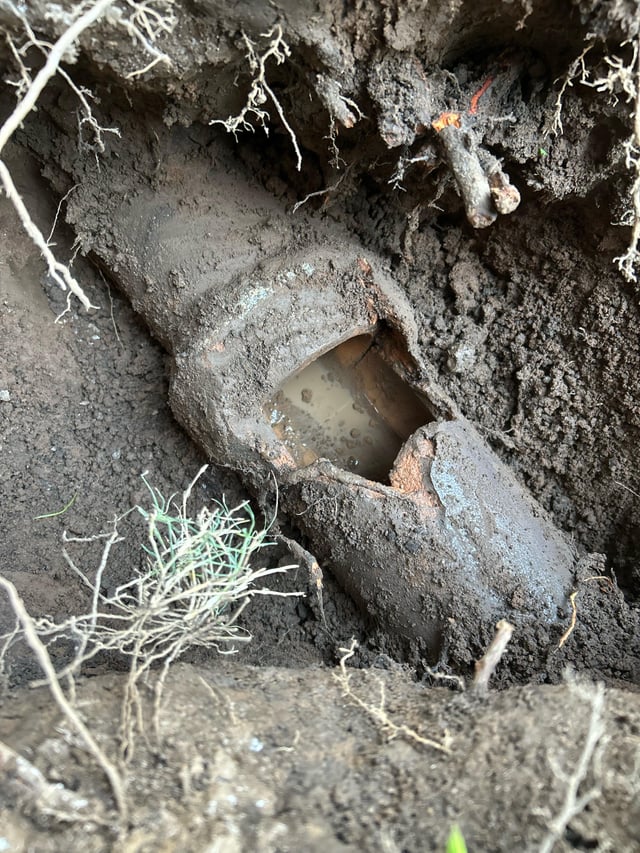
Excavation is often the better answer when a collapsed pipe, a major offset, or an incorrect slope must be physically corrected.
The option many homeowners miss: a hybrid repair
Some quotes make it sound like you must choose one method for the entire line. You do not always have to.
Imagine a 70-foot clay pipe that has one collapsed section near the house and root intrusion through the rest. The crew may be able to excavate and replace the collapsed section, create a proper access point or cleanout, then line the remaining run. That can protect the parts of the property that do not need to be opened while still dealing with the failure that lining cannot cross.
Pipe bursting can be another trenchless replacement option in the right circumstances. It fractures the old cylindrical pipe while pulling a new pipe behind it. NASSCO notes that it can be used for pipelines in poor structural condition and can increase pipe size, but soil conditions, depth, bends, access, and service connections can limit it.[1]
The lesson is not that every home needs a complicated mix of methods. The lesson is that a quote should match the actual damage. If you are handed a one-size-fits-all recommendation without being shown the footage, ask why.
Why the City of London changes this decision
London homeowners have an extra issue that homeowners in many other cities do not. The City classifies the pipe from your foundation to the municipal main as a Private Drain Connection. If your PDC fails under your lawn, the boulevard, sidewalk, or certain city property, you can still be responsible for the work.
The City’s 2026 fee schedule lists $7,250 for repair or replacement of an existing PDC. The City says the flat fee can be paid as a lump sum or through property taxes over ten years, subject to its program process.[2] That is not a full project price. It does not tell you what the private section will cost, whether your pipe can be lined, whether a crew needs to restore your driveway, or what condition the line is in.
It does mean that you should contact the City before authorizing work that may reach city property. Your contractor should be able to explain what they are responsible for, what needs City coordination, and whether the repair is private, City-managed, or both. Our Private Drain Connection explainer breaks down the boundary in plain language.
London’s older neighbourhoods make this especially common. Homes in Old South, Wortley Village, Old East Village, Old North, Byron, and parts of Westmount often have old clay or cast-iron systems and mature trees. The same pattern turns up in nearby older communities such as St. Thomas, Strathroy, Dorchester, Komoka, and Woodstock. A repeated root blockage is not proof that a line must be replaced. It is proof that the line deserves a camera inspection.
How to compare quotes without getting fooled by the first number
This is where many homeowners lose money. A lining quote can look high because the material and specialized installation are priced up front. An excavation quote can look lower because it does not yet include the work required to put the property back together.
Ask each contractor for a written scope that answers the same questions:
| Question to ask |
Why it matters |
| Where is the damage, and how far is it from the house? |
The location tells you whether the work crosses a driveway, sidewalk, or city property. |
| What does the camera show, and can I see it? |
You need to know whether the pipe is cracked, root-intruded, offset, bellied, or collapsed. |
| Can the line be fully cleaned and passed before lining? |
A liner needs a usable route. |
| Does the proposed method correct the actual defect? |
A liner may seal a crack. It does not correct a serious slope problem. |
| What does the price include after the pipe work is done? |
Ask about concrete, asphalt, sod, landscaping, flooring, permits, traffic control, cleanouts, and City coordination. |
| Is there a plan if the camera or cleaning finds a worse section? |
This is where surprise change orders often start. |
| What warranty applies to the materials and the installation? |
A written warranty should identify what is covered and for how long. |
You are not being difficult by asking these questions. You are comparing expensive construction work. A contractor who has done this work for years should expect them.
If the answer still feels unclear, get a second camera review. That does not mean asking three companies to repeat the same sales pitch. It means asking someone to show you the footage, point to the defect, and explain why the method follows from what they can see.
A word about price, insurance, and the driveway
There is no honest flat price for lining or replacement in London. Pipe length, depth, diameter, material, access, location, the need for a cleanout, municipal coordination, and surface restoration all change the job. A 20-foot run in open grass is not the same project as a 60-foot line under concrete that reaches city property.
Home insurance can add another layer of confusion. Sewer backup coverage often helps with damage inside the home after a backup. It may not cover the cost of repairing the aged pipe itself. Some policies include service-line coverage, but the wording matters. Call your insurer before authorizing major work if you think a claim may be involved. Save the camera footage, photos, and written estimates.
Driveway restoration should never be an afterthought. If a replacement quote includes saw-cutting concrete, ask whether it includes the final finish, not just a temporary patch. If the house has decorative concrete, interlock, landscaping, or a mature tree, put that on the table before comparing lining with digging.
Can sewer lining go under a driveway, patio, or finished basement?
Often, yes. This is one of the situations where a trenchless sewer repair quote deserves serious consideration. If the existing line can be cleaned and passed, CIPP lining follows the same underground route. That can avoid opening a driveway, lifting a patio, cutting a basement slab, or removing landscaping simply to reach a pipe that is otherwise suitable for rehabilitation.
It is not a promise that every pipe beneath hard surfaces can be lined. The camera still has to show a usable path, enough structural shape, and no defect that requires the pipe to be physically reset. Ask the contractor to point out the location of every major defect on the footage and explain what access they need at each end of the liner. That answer tells you far more than the words "no dig" on a quote.
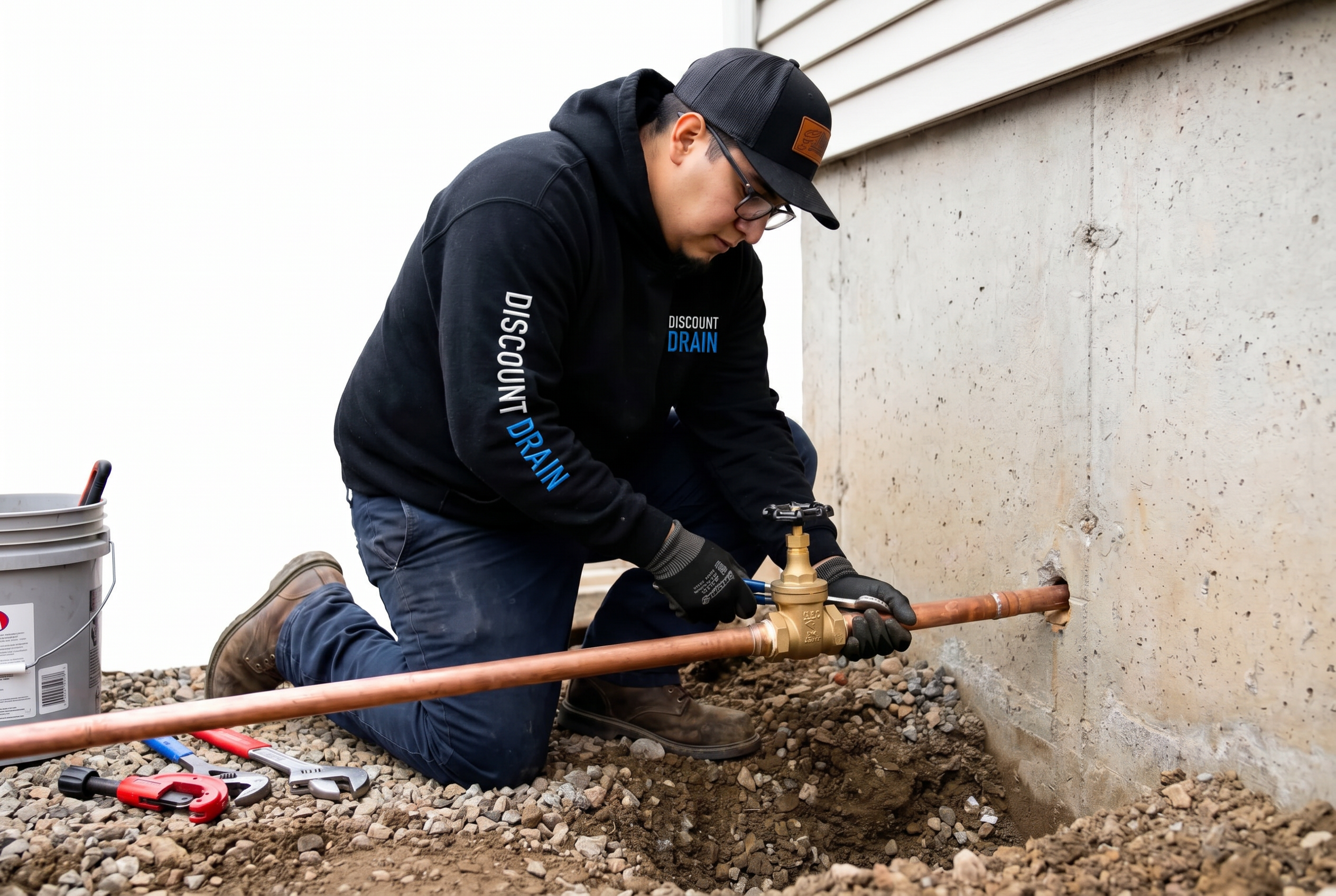
Trenchless equipment can work from existing access points or small pits when the pipe is a suitable candidate for lining.
What to do if your drains are slow today
Do not jump straight from a slow drain to a full replacement. A slow fixture can be a local drain issue. Slow drains across the house, gurgling toilets, a basement floor drain that backs up, repeated root cutting, sewage odours, or wet and sunken ground outside point more strongly to a main-line issue.
Start with a sewer camera inspection. Then review the findings before deciding whether you need drain cleaning, a spot repair, trenchless pipe lining, or sewer repair and installation.
If your line has already failed and sewage is backing up, stop running water and read what to do when a sewer pipe collapses. That is an emergency. The method decision can follow once the immediate risk is under control.
The bottom line
You do not need a contractor who treats lining as the answer to every problem. You also do not need one who reaches for an excavator before explaining the camera footage. You need a clear diagnosis and a scope of work that matches the condition of the pipe and the reality of your property.
For a cracked or root-intruded pipe that remains passable and properly graded, lining can be an excellent way to renew the line with less disruption. For a crushed pipe, a major belly, a serious alignment problem, or a route that needs to change, replacement may be the repair that protects you from doing the job twice. In between, a hybrid plan may make the most sense.
Discount Drain has served London and Southwestern Ontario since 1970. We provide a free sewer video camera inspection at no charge, show you the footage, and explain the options that fit what the camera shows. Request a free quote, contact us at 519-451-8342, or send us a message.
Frequently asked questions
Is sewer lining as good as replacing the pipe?
It can be a strong long-term repair when the existing pipe is suitable. A liner creates a new jointless pipe inside the old route. If the original pipe is fully collapsed, badly displaced, or sitting at the wrong slope, replacement may be the better repair because it can correct the physical problem outside the pipe.
Does sewer lining reduce the pipe diameter?
Yes, a liner uses some of the inside diameter. Whether that matters depends on the pipe size, the liner system, and the flow needs of the home. A responsible assessment considers those details instead of assuming every pipe can accept the same liner.
Can lining fix a sewer belly or poor slope?
Lining follows the existing path. It can renew the inside of the pipe, but it does not raise a sagging section or change a poor grade. If standing water in a belly is the real problem, excavation and replacement of that section may be necessary.
Can a collapsed sewer line be lined?
Sometimes a local repair can reopen access before the rest of a line is lined. A fully collapsed or obstructed section cannot simply be ignored because the liner and cleaning equipment need a usable path. The camera footage and cleaning results determine whether a hybrid plan is possible.
Is lining always cheaper than replacement?
No. Lining often avoids expensive restoration under driveways, patios, floors, and landscaping. But a short, shallow pipe in open lawn may be cheaper to excavate and replace. Compare the all-in cost, including restoration and City coordination, before deciding.
How much does trenchless sewer repair cost in London, Ontario?
There is no useful one-price answer. Length, pipe diameter, depth, cleaning requirements, the condition of the host pipe, access, restoration, and whether the work reaches a Private Drain Connection all affect the estimate. A camera inspection is the sensible first step because it tells you whether lining is genuinely available before you compare it with excavation. For a local cost breakdown, see our London sewer repair cost guide, then request a written scope for your specific line.
Can sewer lining go under a driveway without digging it up?
It can when the pipe is still open, passable, and suitable for lining. The liner uses the existing route, so the driveway may not need to be opened. A major collapse, severe offset, or slope problem may still require an access pit or excavation. The camera footage should show why the proposed approach fits the pipe beneath your driveway.
Do I need a sewer camera inspection before pipe lining?
Yes. A camera inspection establishes the material, location, condition, passability, offsets, roots, low spots, and collapsed sections in the pipe. Without that information, nobody can responsibly tell you whether pipe lining, a spot repair, a hybrid repair, or replacement is right for your home. Book a sewer camera inspection before agreeing to a major repair.
How should I prepare for a sewer camera inspection?
Ask for the video or a written summary of the findings. You should know the pipe material, approximate location of every defect, whether the pipe is passable, whether there is a belly or offset, and whether the work approaches city property. Our guide to sewer-line warning signs explains the terms that often appear in a report.
Sources
[1] NASSCO Pipeline Rehabilitation Matrix 2025
[2] City of London: Sewers and wastewater
Related reading: What Is a Private Drain Connection (PDC) in London, Ontario? | Who Is Responsible for Your Sewer Line in London, Ontario? | Your Sewer Pipe Collapsed in London, Ontario. Here's Exactly What to Do Next.