Most London homeowners only find out what a Private Drain Connection is when something goes wrong underground. Understanding the PDC rule before you have a problem could save you thousands of dollars and a lot of unnecessary stress.
If you own a home in London, Ontario and have never heard the term "Private Drain Connection," you are not alone. Most homeowners only find out what it means when something goes wrong underground, usually at the worst possible moment.
Understanding the PDC rule before you have a problem is one of the most practical things you can do as a London homeowner. It affects how much a sewer repair will cost you, who you need to call, what the city will and will not pay for, and whether your home insurance will help. This post explains all of it in plain language.
What Is a Private Drain Connection?
A Private Drain Connection, or PDC, is the pipe that connects your home's internal plumbing to the City of London's main sewer line in the street. It carries all the wastewater from your house, everything from toilets and sinks to laundry and floor drains, out to the municipal system.
In most Ontario municipalities, the responsibility for this pipe is split at the property line. The city owns and maintains the section from the main line to your property line. You own and maintain the section from your property line to your house. That is the standard arrangement across most of the province.
London does not follow that standard.
The City of London classifies the entire PDC as the homeowner's responsibility, including the section that runs under city property, the road allowance, and in some cases the sidewalk. This was established through a municipal bylaw that reclassified what most cities call a "sewer lateral" as a private connection that the property owner is responsible for maintaining and repairing.
The practical result is that if your PDC fails anywhere along its length, from your foundation wall to the point where it connects to the city's main line, you are responsible for the cost of the repair.
For the full picture of who is responsible and what the financial exposure looks like, read our companion post: Who Is Responsible for Your Sewer Line in London, Ontario?
Why Is London Different from Other Ontario Cities?
This is a question a lot of London homeowners ask, and the honest answer is that it comes down to a policy decision the city made years ago. By classifying the full lateral as a private connection, the city shifted the maintenance and repair burden to property owners rather than absorbing it as a municipal cost.
Whether that is fair is a separate debate. What matters practically is that it is the rule, and it has real financial consequences when something goes wrong.
The city does offer a flat-fee program for PDC repairs that involve city property, which we will explain below. But the base responsibility for the pipe sits with the homeowner.
Where Does Your PDC Start and End?
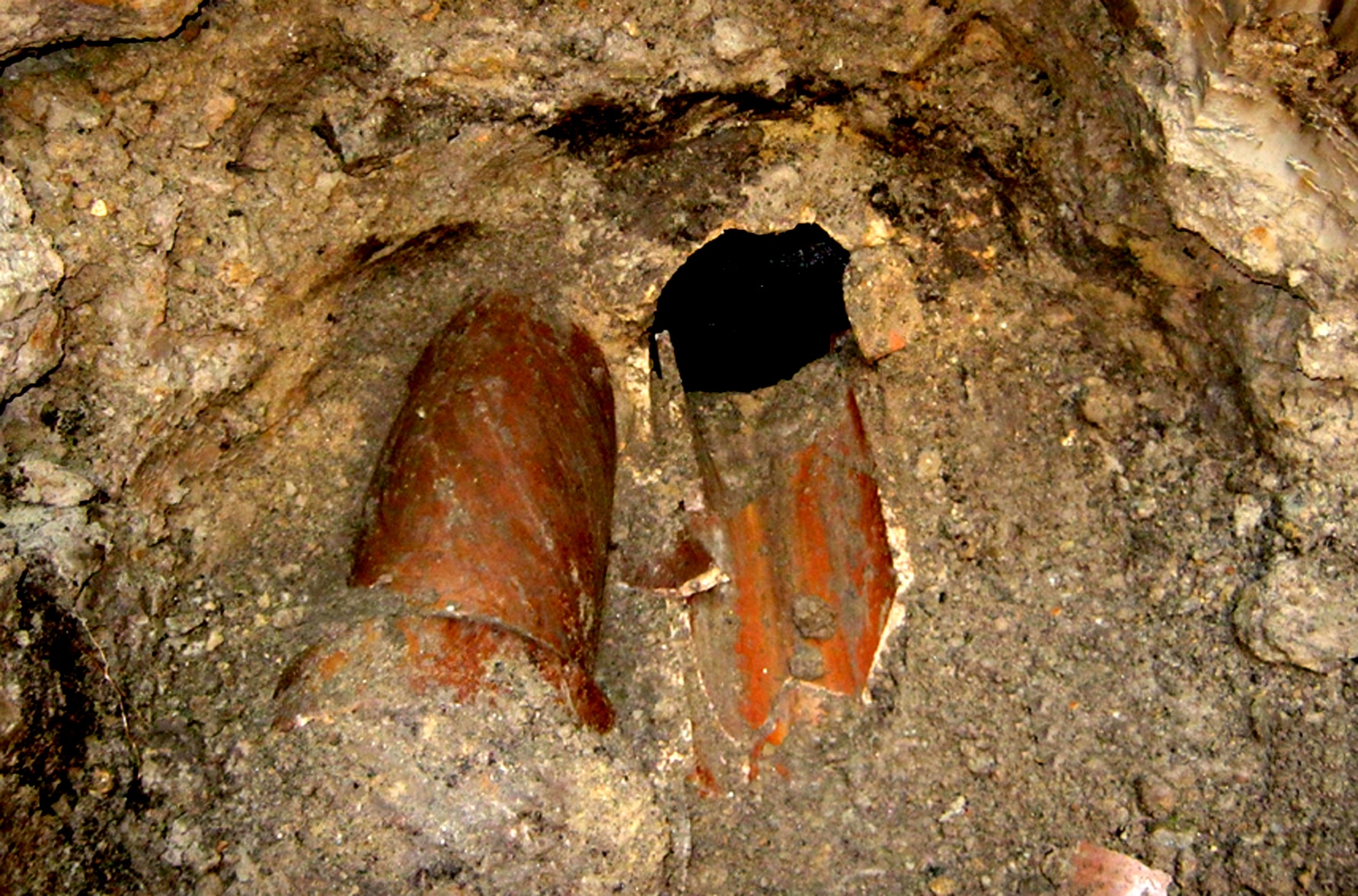
Your PDC starts at the foundation wall of your house, where the main drain exits the building, and ends at the connection point with the city's main sewer line, which is typically located in the centre of the road or just past the curb line.
The length of a PDC varies by property. A house close to the street might have a PDC of 10 to 15 metres. A house set further back from the road, or on a larger lot, might have a PDC of 30 metres or more. Depth also varies, typically between 1.5 and 4 metres, depending on the age of the neighbourhood and the local topography.
To find out the exact length and routing of your PDC, you can contact the City of London's geomatics department and request a sewer schematic for your address. This is a free service and it gives you a map showing where your PDC runs, which is useful both for understanding your exposure and for planning any repair work.
What Happens When a PDC Fails?
PDC failures typically fall into a few categories. Understanding which type you are dealing with affects what the repair options are and what it will cost.
Root intrusion is the most common issue in older London neighbourhoods. Clay pipe, which was the standard material for sewer lines built before the 1980s, has joints every few feet. Tree roots find those joints and grow into the pipe over time, eventually causing partial or complete blockages. In the early stages, root intrusion can be managed with periodic drain cleaning. Left untreated, it leads to collapse.
Pipe belly or sag happens when a section of pipe settles and creates a low point where waste accumulates. This is common in areas with clay soil, which shifts with moisture changes. A belly does not always cause an immediate backup, but it creates a chronic slow-drain condition and eventually leads to failure.
Full collapse is exactly what it sounds like. The pipe wall fails, usually due to age, root damage, or soil movement, and the pipe can no longer carry waste. This is a true emergency that requires immediate repair. If you are in this situation right now, read Your Sewer Pipe Collapsed in London, Ontario. Here's Exactly What to Do Next.
Offset joints occur when sections of pipe shift out of alignment. This is common in older clay pipe systems and can cause partial blockages and root entry points.
Not sure which of these you are dealing with? Read How to Tell If Your Sewer Line Is Broken for the warning signs to watch for.
A sewer camera inspection is the only reliable way to determine which of these you are dealing with. Without it, you are guessing, and guessing on underground work is expensive.
The City's Flat-Fee PDC Program: What It Covers and What It Does Not
When a PDC repair requires work on city property, the City of London offers a flat-fee program that allows homeowners to have the city complete the portion of the repair on city land at a fixed cost. As of 2025, that fee is approximately $7,000 to $8,250, and it can be spread over your property taxes over ten years.
This program exists because excavating through road allowance, sidewalk, and city property requires permits, traffic control, and coordination that most private contractors cannot easily arrange. The city has the equipment and the right of way, so it is often more practical for them to handle that section.
However, the flat-fee program only covers the city property section of the PDC. You are still responsible for the section from your foundation to the property line, and you need to hire a private contractor for that portion.
A few important things to know about the flat-fee program:
The city will not start their portion of the work until you have arranged for the private section to be repaired. The two repairs need to be coordinated so the connection is made properly.
The flat fee is the same regardless of the actual cost of the work on city property. Whether the city spends $5,000 or $15,000 completing their section, you pay the flat fee. In some cases, this is a good deal. In others, it may be worth getting a quote from a private contractor who has the permits and equipment to do the full job.
The city's inspection process can take time. If you are in an emergency situation with sewage backing up into your home, you cannot always wait for the city to schedule their inspection and repair. In that case, you may need to have a private contractor address the immediate emergency and then coordinate with the city afterward.
How to Protect Yourself Before a Collapse Happens
The best time to deal with a PDC problem is before it becomes an emergency. Here is what that looks like in practice.
Get a preventative camera inspection. If you own a home built before 1985 in London, there is a reasonable chance your PDC is clay pipe. Clay pipe has a lifespan of roughly 50 to 100 years, and a lot of it in London is now at or past that range. A free sewer video camera inspection will show you the current condition of the pipe, whether there is root intrusion, any bellies or offsets, and how much useful life is likely left.
At Discount Drain, we include a free sewer video camera inspection available at no charge. If you want a standalone inspection to understand the condition of your PDC, call us at 519-451-8342 and we can arrange it.
Know your options before you need them. If a camera inspection shows early-stage root intrusion or minor deterioration, you have options that are far less expensive than a full replacement. Periodic root cutting can extend the life of a clay line significantly. Trenchless pipe lining can rehabilitate a deteriorating pipe without excavation. Read our full comparison of trenchless vs. traditional sewer repair to understand when each method makes sense.
Check your home insurance. Some policies include coverage for sudden and accidental collapse of underground service lines. Review your policy now, before anything happens, so you know what is covered and what is not. If you do not have this coverage and your home is older, it may be worth adding it.
Request your sewer schematic from the city. Knowing exactly where your PDC runs and how deep it is gives you useful information for any future repair work and helps you understand what is under your driveway, lawn, and sidewalk.
What Does a PDC Repair Actually Cost in London?
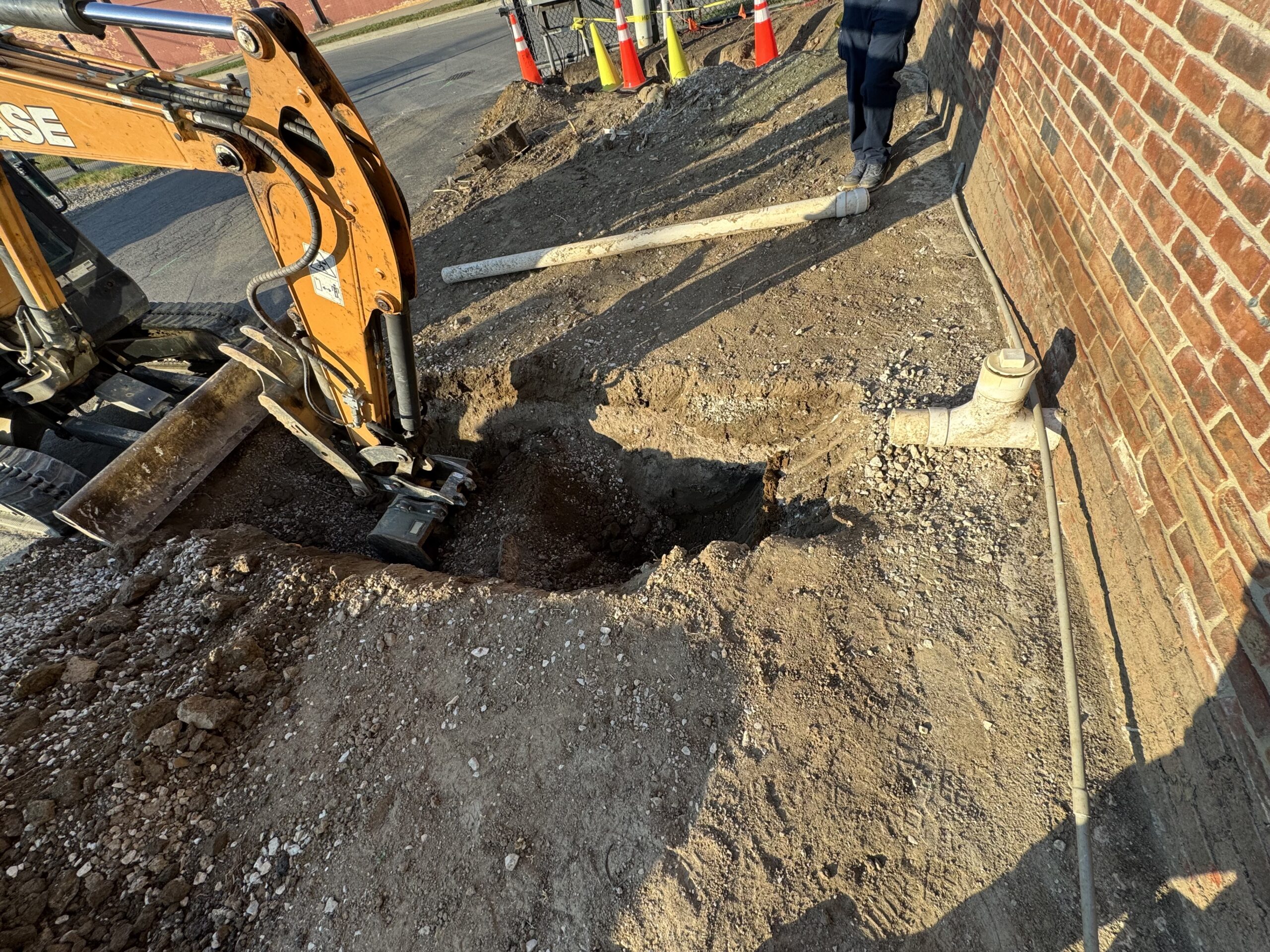
Costs vary based on the length of the pipe, the depth, the access, and the repair method. Here is a general guide based on what London homeowners have paid in recent years. For a more detailed breakdown, read our post on sewer repair costs in London, Ontario.
| Repair Scenario |
Approximate Cost |
| Root cutting and drain cleaning (maintenance) |
$300 to $600 |
| Spot repair (1 to 3 metre section, private property) |
$2,500 to $5,000 |
| Trenchless pipe lining (full PDC length) |
$8,000 to $15,000 |
| Full PDC replacement (private section only) |
$10,000 to $20,000+ |
| City flat-fee PDC repair (city property section) |
$7,000 to $8,250 |
| Full PDC replacement including city coordination |
$15,000 to $28,000+ |
These are rough ranges. The only way to get an accurate number for your specific situation is a camera inspection and a written quote. Request a free quote for review during business hours. For urgent issues, call 519-451-8342.
A Note on Older London Neighbourhoods
If you live in Old South, Wortley Village, Old East Village, Byron, Westmount, or any of the established neighbourhoods in the inner city, your PDC is almost certainly clay pipe. These areas were largely built between the 1920s and the 1960s, and the sewer infrastructure reflects that. The same issue affects homeowners in nearby communities we serve, including Strathroy, St. Thomas, Dorchester, Komoka, and Woodstock.
Clay pipe is not inherently bad. A lot of it has lasted 80 or 100 years and is still functioning. But it is at the age where problems start appearing more frequently, and the cost of ignoring early warning signs is much higher than the cost of addressing them proactively.
The warning signs to watch for include slow drains throughout the house (not just one fixture), gurgling sounds from floor drains or toilets, wet spots in the lawn above the PDC route, and any history of root intrusion in previous cleanings. For the full list, read How to Tell If Your Sewer Line Is Broken.
If you have had your drains cleaned more than once in the past few years for root intrusion, that is a strong signal that a camera inspection is overdue. Read How Often Should You Clean Your Drains? for the maintenance schedule that makes sense for older London homes.
Frequently Asked Questions
Does the City of London own any part of my sewer line?
No. Under London's PDC classification, the entire pipe from your foundation to the city's main line is your responsibility. The city owns the main line in the street, but not the connection to your house.
Can I hire my own contractor to do the full PDC repair including the city property section?
In some cases, yes, if the contractor has the required permits and equipment. However, for work that involves cutting through road surface or sidewalk, the city's flat-fee program is often the more practical option. Discuss this with your contractor before deciding, or contact us for an honest assessment.
How long does a PDC repair take?
A trenchless lining job typically takes one to two days. A full excavation and replacement can take three to five days. If city coordination is required, add time for scheduling.
Will the city come out to inspect for free?
Yes. Call 519-661-4570 to report a sewer issue. The city will inspect the municipal main line at no charge and confirm whether the problem is on their side or yours.
What is the best way to prevent PDC problems?
Regular sewer camera inspections every five to seven years for older homes, combined with root cutting as needed, is the most cost-effective preventative approach. Catching problems early gives you options. Waiting until a collapse happens removes most of them.
Related reading: Your Sewer Pipe Collapsed in London, Ontario. Here's Exactly What to Do Next. | Who Is Responsible for Your Sewer Line in London, Ontario? | How to Tell If Your Sewer Line Is Broken