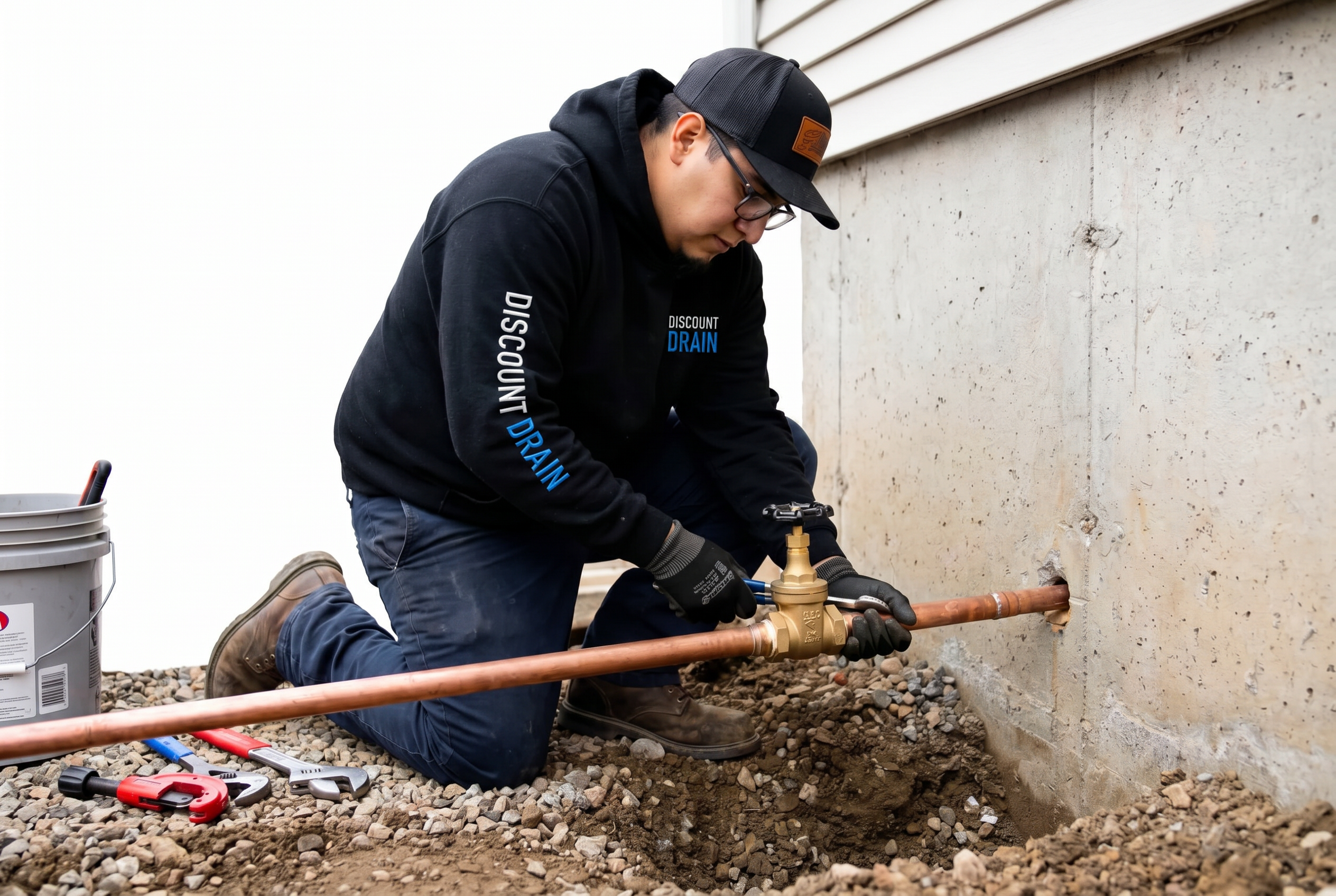
One slow sink can be a nuisance. Slow drains across the house, gurgling fixtures, sewer odours, a damp crawlspace, or a wet strip in the yard can point to a hidden sewer-line issue. Use this London homeowner checklist to sort the warning signs, know when to stop using water, and decide when a camera inspection is worth it.
There is a stage of a sewer problem that gets missed all the time. Nothing has flooded yet. The toilet still flushes. The kitchen sink eventually empties. You can smell something unpleasant near the basement floor drain, but only now and then.
It is easy to explain each thing away. The sink is old. The basement has always been a bit musty. Maybe the tree out front is just doing what trees do.
Sometimes that is true. One slow bathroom sink may be hair in a trap. A smell near an unused floor drain may be a dry P-trap. A damp crawlspace can come from humidity, exterior grading, or a plumbing leak that has nothing to do with the buried sewer line.
But when the same home has several of these signs at once, the pattern matters. Multiple slow drains, gurgling from another fixture, a basement floor drain reacting when the washing machine runs, a persistent sewer smell, or a damp area near the foundation can mean the main line needs a closer look. It may be roots at old clay joints, a partial blockage, a broken connection, a belly that holds water, or a pipe that is beginning to fail.
This checklist is built to help you notice the difference before you are standing in a basement with wastewater on the floor. It cannot diagnose a pipe from across the internet. A sewer camera inspection does that. It can help you decide whether you are dealing with one annoying fixture or a problem that runs deeper.
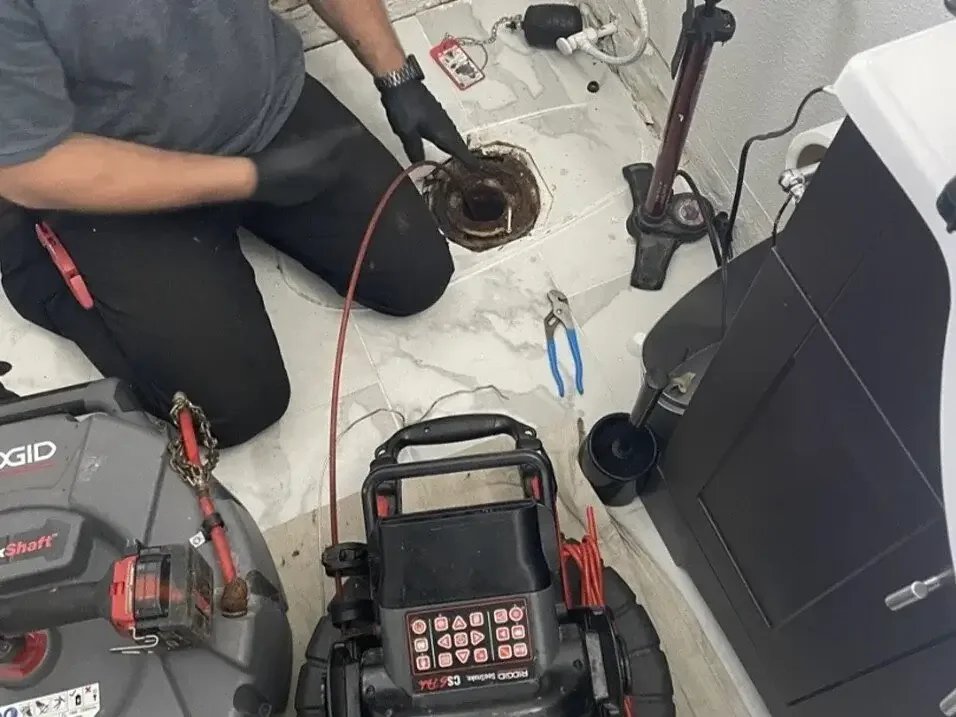
A camera inspection shows the inside of the pipe before anyone recommends a repair method.
Start with the pattern, not the loudest symptom
Homeowners tend to focus on the fixture that is creating the biggest inconvenience. The shower is slow. The toilet gurgles. The basement smells odd. That makes sense, but a main sewer issue usually announces itself through the relationship between fixtures.
Use this first pass before buying another bottle of drain cleaner or calling someone to snake one sink.
| What you notice |
What it often points to |
Sensible next step |
| One sink or one tub drains slowly, while everything else works normally |
A local clog, hair, soap buildup, or a fixture-specific problem |
Start with the local fixture. Drain cleaning may be enough if the problem keeps returning. |
| Two or more fixtures on different branches are slow |
A restriction farther down the shared line |
Arrange a camera inspection if the pattern persists. |
| Flushing a toilet makes a nearby tub, shower, or floor drain gurgle |
A venting issue or a restriction in the common drain path |
Do not assume it is minor. A camera and plumbing assessment can separate the causes. |
| Using water upstairs causes backup or bubbling at a basement fixture |
A likely main-line restriction, often downstream of that basement fixture |
Stop unnecessary water use and arrange an urgent inspection. |
| A sewer smell is strongest at one unused floor drain |
A dry P-trap is possible |
Add water to the drain, then watch for a return of the smell. |
| Sewer smell, multiple slow drains, and a wet or soft outdoor area show up together |
A buried sewer-line issue becomes more likely |
Book a camera inspection and document what you are seeing. |
One clue is rarely enough. Three connected clues are a different story.
One slow drain does not automatically mean you have a broken sewer line. The bathroom sink that collects hair, the kitchen drain that takes grease, and the basement laundry sink that sees soap buildup are all capable of creating their own little messes.
The concern rises when the slowdowns are happening in more than one part of the house. If the shower, a toilet, and the kitchen sink are all draining badly, you are probably not dealing with three unrelated clogs on the same week. The shared pipe is worth investigating.
Pay special attention to the lowest fixture. In a typical home, a basement shower, floor drain, or laundry sink reacts first when the main sewer route is restricted. Water from higher fixtures is trying to move toward the street. If it cannot get through, it looks for the lowest available exit.
There is a practical test here. Run a modest amount of water in one fixture at a time. Flush a toilet once. Let a sink run for thirty seconds. Do not try to force a backup. You are simply watching for cross-reactions. Bubbling in a second fixture, gurgling from the floor drain, or a toilet that changes its water level when the shower drains are all useful notes for the contractor who inspects the line.
Recurring work matters too. If a line is cleared and the same problem returns six months later, ask what the last service found. Root cutting can restore flow in an older clay line, but repeated roots are a reason to see the pipe. The same goes for a drain that clears after snaking and then starts backing up again. A cleaning can remove a blockage. It cannot repair a separated joint, a cracked pipe, or a section that has settled out of grade.
For a deeper look at the repair choices after a camera finds damage, read Sewer Lining vs. Sewer Replacement in London, Ontario. The method should follow the footage, not come before it.
2. A sewer smell needs a simple check before a big conclusion
The smell can make people panic, and sometimes it should make you act quickly. But the first step is to avoid treating every unpleasant drain odour as proof of a collapsed sewer line.
The easy possibility is a dry P-trap. Every sink, tub, shower, and floor drain has a curved section of pipe meant to hold water. That water creates a barrier between the room and the sewer gases in the pipe. If a basement floor drain or spare shower goes unused for weeks, the water can evaporate and the smell can move into the room.[1]
Start there if the smell is limited to one little-used fixture. Pour water slowly into the drain. A few cups may be enough for a small trap, though a larger floor drain may need more. If the smell disappears and stays gone, you may have found a simple answer. If it returns quickly, or if the smell is present at several drains, around a toilet, or in a crawlspace, keep looking.
Other non-main-line causes deserve attention as well. A loose toilet can have a failing seal at its base. A blocked or poorly functioning vent can make drains gurgle and let odours move the wrong way. A kitchen sink overflow can collect organic buildup. These are real plumbing problems, but they call for a different repair from a buried sewer collapse.
The pattern becomes more serious when odour joins slow drainage, gurgling, recurring backups, or a wet area around the home. In that situation, stop masking the smell with cleaner or air freshener. Document where it is strongest and when it appears. Does it worsen after laundry? After a heavy rain? In the morning after the home has been closed up? That timing can help a camera inspection or a smoke test find the source.
If an indoor odour is strong enough to make the space uncomfortable, ventilate the area and avoid lingering in a tight crawlspace or mechanical room. Sewer gas can contain irritating compounds, and a strong persistent odour deserves prompt professional attention.[1]
3. Gurgling and bubbling mean the system is struggling for air or space
Gurgling is one of the most useful warning signs because it shows that one fixture is affecting another. That is not how a healthy drainage system should behave.
When you flush a toilet, the water should move out and air should move through the vent system without drawing water out of nearby traps. When a tub drains, it should not make the toilet bubble. If it does, the system may be pulling air through a fixture because something farther along is restricted. A blocked vent can do this. A partial main-line blockage can do it too.
The difference is often in the rest of the picture. Gurgling by itself, especially after a renovation or during a cold spell that affects a roof vent, may lead a plumber toward the venting system. Gurgling plus slow drains in several rooms, a floor drain that reacts to laundry, or a recent backup points more strongly toward the main line.
Do not pour chemicals into a gurgling system to see what happens. Chemical cleaners can be hard on older piping, dangerous if they splash back, and unhelpful when the issue is roots, an offset, or a pipe defect farther down the line. A drain cleaning service can clear ordinary buildup. When the same line keeps making noise, the next question should be what the camera shows.
4. A damp or foul crawlspace is a reason to investigate, not a diagnosis by itself
Crawlspaces are good at hiding trouble. They are also good at holding ordinary dampness, musty air, old building materials, pests, and smells that drift up into the rest of the house. A damp crawlspace does not automatically mean the sewer is leaking.
Still, sewage or wastewater in a crawlspace is a different level of concern. It can contaminate soil, damage wood supports, and leave a powerful odour. Moisture around the path where the building sewer exits the home is worth noting, especially if it appears with slow drains or sewer smell indoors.[2]
If you have safe access, look without crawling into a tight space or disturbing anything contaminated. You are looking for standing water, wet soil where it should be dry, stains beneath a drain pipe, obvious leaks at an exposed joint, or an odour that becomes much stronger below the floor. Take a few photos from the entrance. Do not treat a crawlspace inspection like a weekend project if the air is foul or the area is cramped.
The more common answer may be a foundation moisture issue, a plumbing supply leak, poor exterior drainage, or seasonal humidity. Our guide to wet basement causes in Ontario can help with that side of the question. The point is not to label every damp corner a sewer failure. The point is to avoid ignoring dampness that is paired with a drainage pattern upstairs.
5. The yard can show you what the house cannot
The sewer lateral runs from the house toward the municipal main, usually beneath part of the front or side yard. If a buried pipe leaks, shifts, or breaks, the ground above it sometimes gives you a clue.
Walk the likely path after a few dry days. Look for a patch that stays wet longer than the rest of the lawn, grass that grows noticeably differently along a line, a low spot that seems to be getting softer, or a sewage-like odour outside near the foundation. Take a photo and note the weather. A wet spot after a downpour may be ordinary drainage. The same wet spot after a dry week deserves a closer look.
London's older neighbourhoods have an added reason to pay attention. Mature trees and older pipe materials often share the same property. Tree roots are attracted to moisture at pipe joints. They can work their way through small openings, catch paper and debris, and gradually reduce the available space inside the line. The City of London lists roots, grease, wipes, and pipe collapse among the reasons a sanitary lateral can become blocked.[3]
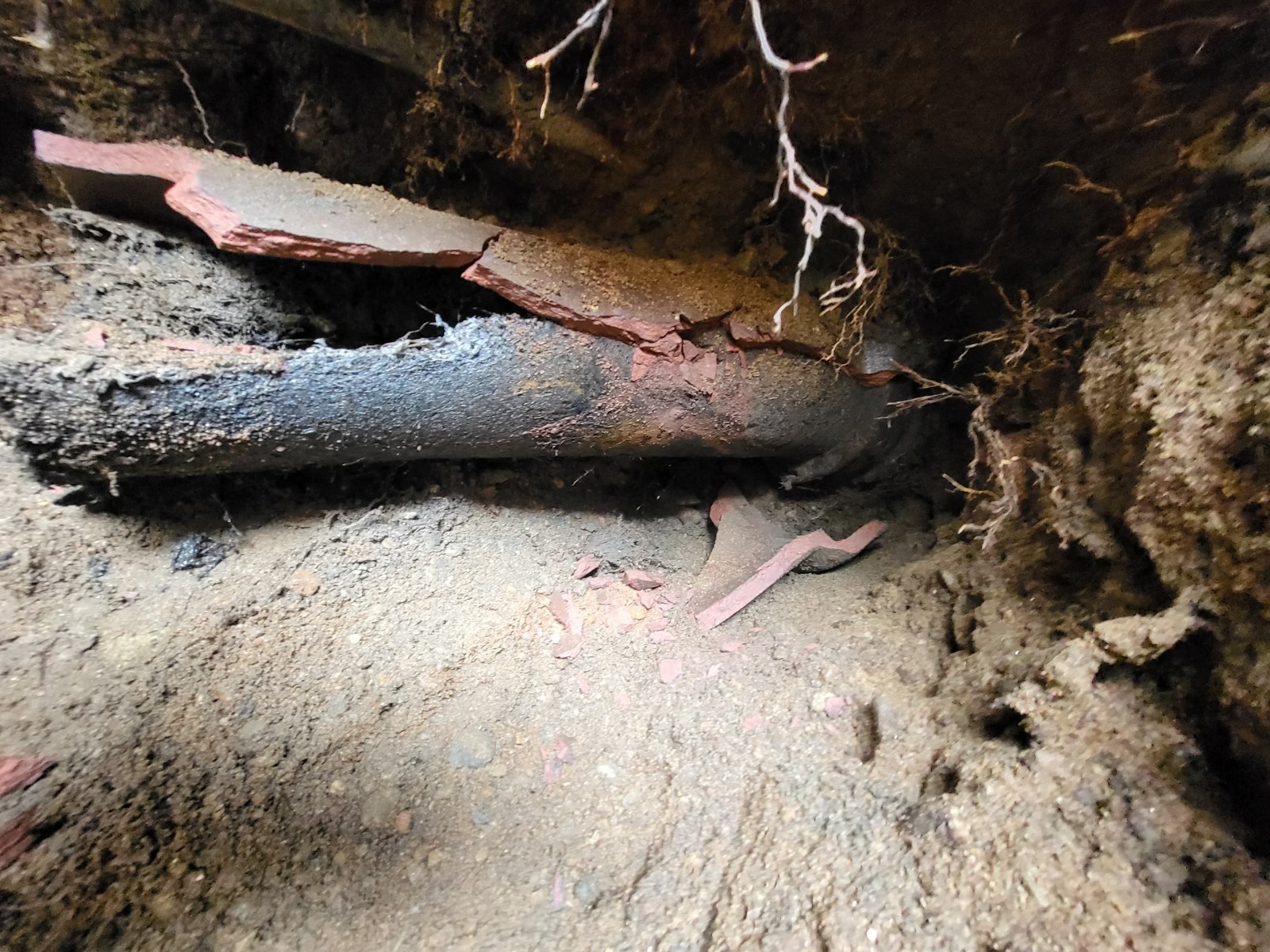
A camera can reveal root intrusion, broken joints, offsets, and collapsed sections that cannot be seen from the yard.
An unusually green patch is not proof of sewage. A soft spot is not proof of collapse. But outdoor signs that appear alongside indoor symptoms move the camera inspection higher on the list.
6. In London, the location of the problem changes the next phone call
London homeowners have one extra layer to understand. The pipe from the house to the municipal sanitary main is split into the building sewer on private property and the Private Drain Connection, or PDC, from the property line toward the City main. The City says the homeowner is financially responsible for the full sanitary lateral, while the City is responsible for the sewer main in the roadway.[3]
That is why location matters. If wastewater is actively entering a basement, the City asks residents to report the flooding so staff can check whether the municipal main is functioning. If the main is working normally, a contractor can inspect the homeowner's lateral and identify whether the issue is in the building sewer or the PDC.[3]
The City also makes the repair logic clear. A grease blockage may clear with cleaning. A deteriorating PDC may be suitable for lining. A collapsed or severely damaged section may need replacement. You do not need to choose among those outcomes before there is a diagnosis. You need a record of where the problem is and what shape the pipe is in.
Read Who Is Responsible for Your Sewer Line in London, Ontario? before assuming that the street, boulevard, or City property makes the repair automatically municipal. The same question comes up for homes in St. Thomas, Strathroy, Dorchester, Komoka, and Woodstock, though the local rules can differ by municipality.
7. When you should stop using water and call now
There is a point where diagnosis should not wait for the weekend.
Stop unnecessary water use and call for help if sewage or dirty water is backing up through a basement floor drain, tub, shower, or toilet. Do not run the washing machine, dishwasher, or another shower to test it. Keep children and pets away from contaminated water. If there is an electrical hazard near standing water, leave the area and get the right help.
Call the City of London as well when there is basement or yard flooding so it can check the public sewer main. Then arrange a camera inspection of the lateral if the main is not the issue. This sequence protects you from paying for the wrong diagnosis and gives you a clearer record of what happened.
If the problem is not an active backup but it is repeating, you still have a reason to act. Waiting for the line to fail completely does not make the repair cheaper. It usually reduces your options. A root-filled pipe that can still be cleaned and lined is a different situation from a pipe that has collapsed under a finished basement or driveway.
For immediate cleanup and documentation steps, read Sewer Backup: What to Do in the First 24 Hours. If the camera has already found a failure, Your Sewer Pipe Collapsed in London, Ontario. Here's Exactly What to Do Next. covers the repair decisions that follow.
What a useful sewer camera inspection should answer
The camera appointment is not a formality before someone hands you a big quote. It should answer practical questions.
Ask the contractor to show you the footage and explain the location of the issue. Is the line blocked by roots? Is a joint open? Is there an offset where two sections no longer line up? Does the pipe have a low spot that holds water? Can the camera pass through? Is the trouble on private property, at the PDC, or near the municipal main?
Those answers decide the sensible next step. A root intrusion in a pipe that is still broadly round and passable might lead to cleaning and a conversation about trenchless pipe repair. A short broken section in open lawn might need a spot repair. A crushed line or a serious slope problem may need sewer repair and installation with excavation. A camera inspection does not make every repair simple, but it makes the recommendation accountable to the actual condition of the pipe.
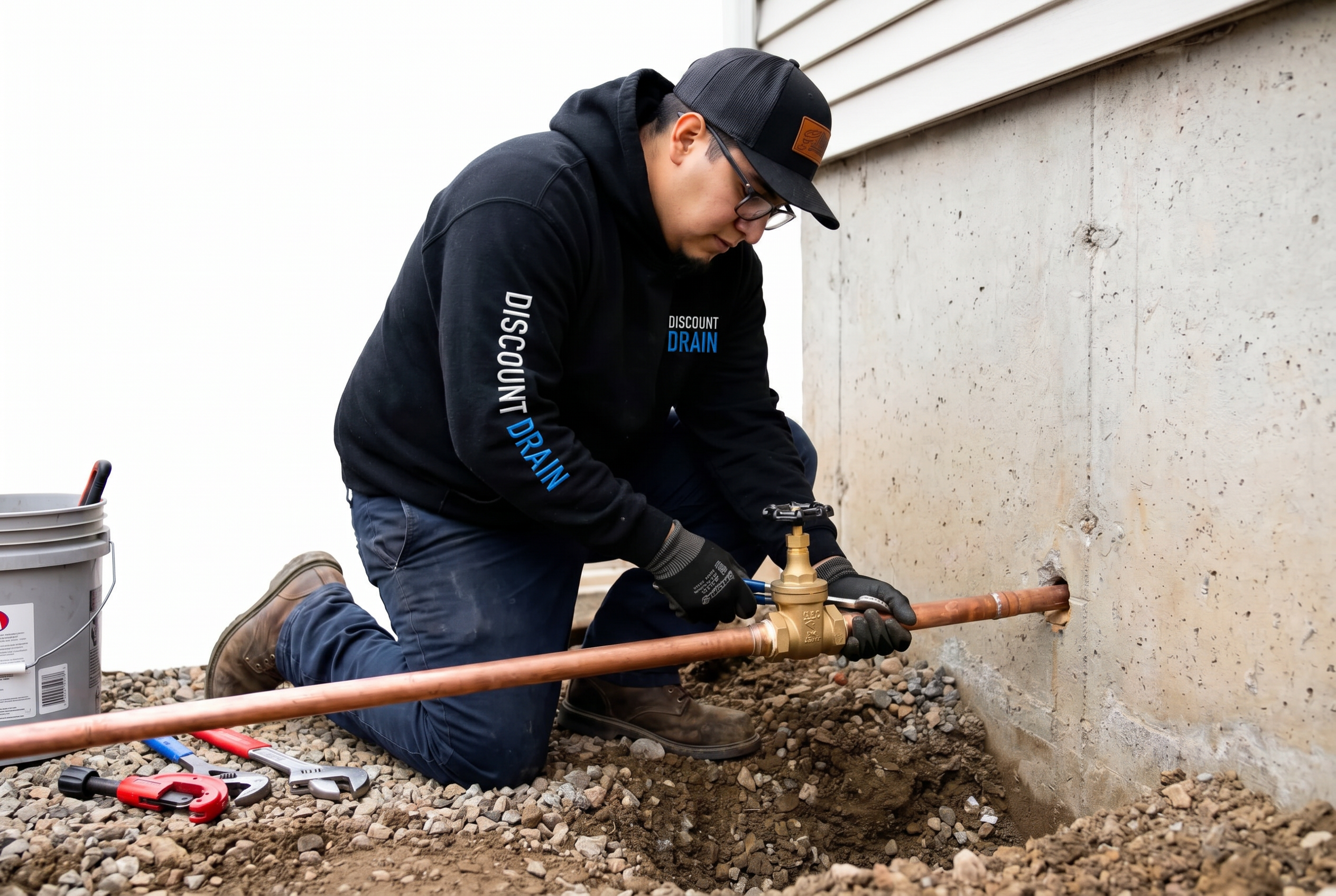
The repair method comes after the diagnosis. The first job is to see the line and locate the fault.
A practical checklist for this week
If the symptoms are mild, take ten minutes to create a simple record. Write down which fixtures are slow. Note whether one fixture makes another gurgle. Add water to little-used floor drains and see whether the smell changes. Photograph a damp crawlspace entrance or a suspicious yard spot from a safe distance. Check whether the issue is worse after rain or heavy water use.
If several signs are present, book a free sewer video camera inspection with Discount Drain. We will show you what is inside the line and explain whether cleaning, a repair, lining, replacement, or further plumbing diagnosis makes sense. You can also request a free quote, call 519-451-8342, or contact us.
The goal is not to scare yourself into a major repair. The goal is to stop guessing before the problem makes the decision for you.
Frequently asked questions
Can a slow drain mean my sewer line is collapsing?
It can, but one slow drain is more often a local fixture issue. The concern rises when several drains are slow, the lowest fixture backs up, toilets or tubs gurgle when another fixture is used, or the same line needs repeated clearing. A camera inspection can identify whether there is a collapse, roots, an offset, a low spot, or a straightforward blockage.
Why does my basement smell like sewer only sometimes?
An unused floor drain with a dry trap is one common cause. Pour water into the drain and see if the smell resolves. If it returns quickly, appears at several fixtures, worsens with water use, or comes with slow drains and gurgling, a plumber or drain contractor should investigate the system more closely.
Is a damp crawlspace a sign of a broken sewer pipe?
It can be, but it is not enough to prove it. Crawlspaces can be damp because of humidity, exterior water, a plumbing leak, or drainage conditions. Dampness or a sewage-like odour alongside slow drains, a backup, or an outdoor wet strip is a stronger reason to inspect the sewer line.
What does it mean when my toilet gurgles when I run the shower?
The drainage system may be struggling to move air and water through a shared path. A vent issue can cause that pattern. A partial restriction in the main line can cause it too. If several fixtures are affected, a camera inspection is the practical way to narrow it down.
Should I pour chemical cleaner down a drain that keeps backing up?
Chemical cleaner may not reach or resolve a root intrusion, broken joint, offset, or collapsed section of the main line. It can also create a hazard if the drain backs up while chemicals are in the pipe. Recurring backups call for a diagnosis rather than repeated chemical treatments.
Does home insurance pay for a hidden sewer-line problem?
That depends on the policy, the cause of the issue, and the endorsement you carry. Sewer backup coverage and service line coverage often address different parts of a loss. Read Does Home Insurance Cover a Sewer Backup or Collapsed Pipe in London, Ontario? before assuming a pipe repair or interior cleanup is covered.
Sources
[1] Oatey: Why Does My House Smell Like Sewer Gas?
[2] Basement Systems: What's That Smell? Identifying Crawl Space Problems with Your Nose
[3] City of London: Sewers and wastewater
[4] NuFlow: How To Diagnose A Cracked Sewer Pipe At Home
Related reading: Private Drain Connection guide | Sewer lining versus replacement | Sewer backup insurance coverage