A drain that works for a few weeks after snaking, then slows down again, needs more than a stronger tool. Learn when a drain snake makes sense, when hydro jetting may help, and why a camera inspection should guide the choice.
Hydro jetting vs. drain snaking in London, Ontario: which one actually clears a recurring clog?
A drain can teach a homeowner a frustrating lesson.
It slows down. Someone clears it. Water starts moving again. For a little while, life goes back to normal. Then the kitchen sink starts holding water after dinner. The basement floor drain makes a small gurgling sound. The toilet seems to hesitate when the washing machine empties.
At that point, people usually hear two terms: drain snaking and hydro jetting. One sounds simple. The other sounds like the stronger option. It is tempting to assume the stronger option must be the better one.
It is not that simple.
A drain snake and a hydro jet are both cleaning tools. Neither one repairs a cracked pipe, an offset joint, a low spot that keeps holding waste, or a collapsed section of sewer. The right choice depends on what is in the line, where it is, and whether the pipe is solid enough for the work. That is why a recurring clog should lead to a camera conversation, not a sales pitch about the biggest machine in the truck.
If wastewater is rising through a floor drain, toilet, shower, or laundry sink, stop using water in the house. The City of London asks residents with active basement flooding to report it so staff can check the municipal main. If the main is working normally, a qualified drain contractor can assess the private sanitary lateral.[1]
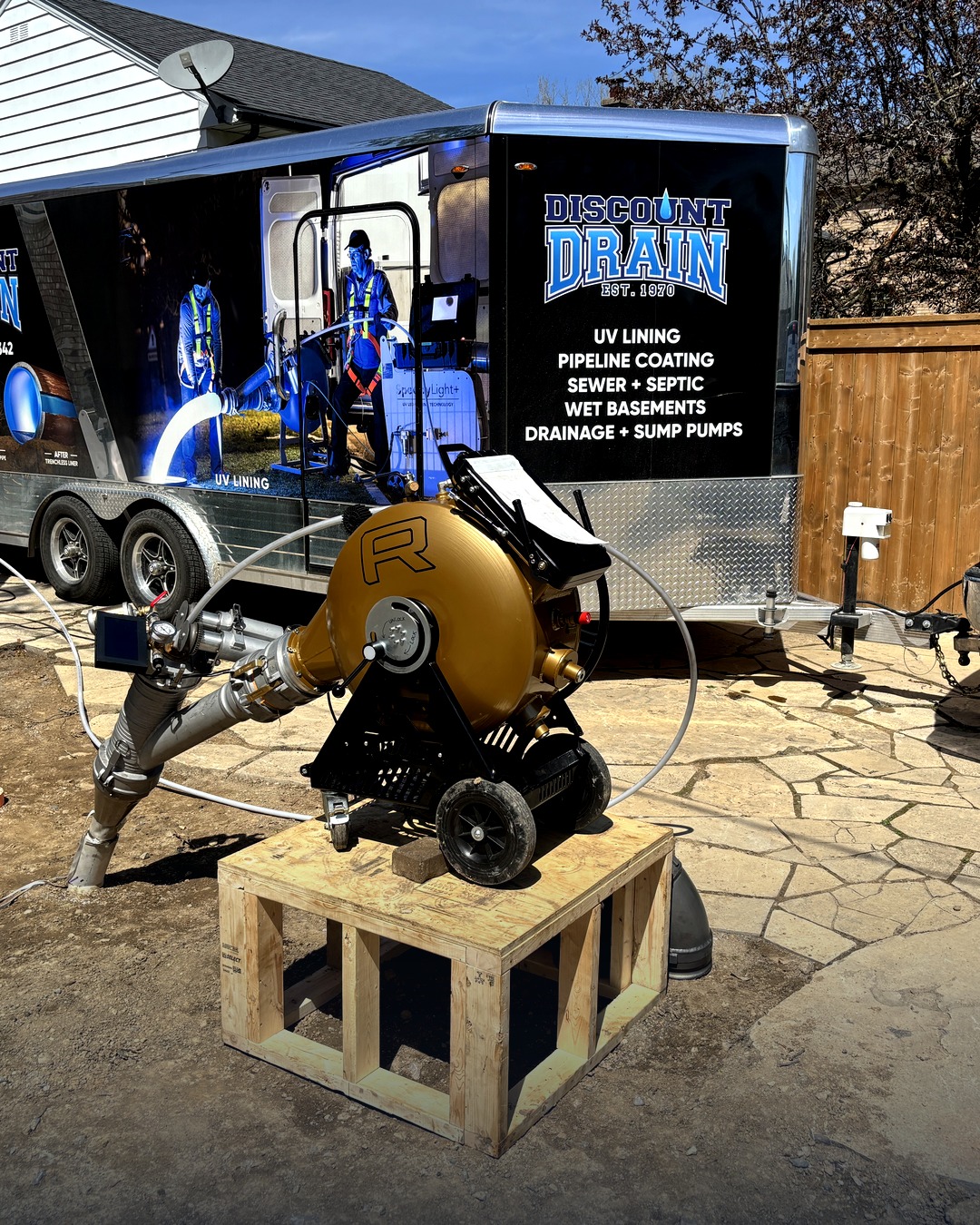
Hydro jetting equipment is designed to clean buildup from a pipe. The camera result should determine whether this is the right next step for a recurring clog.
A recurring clog is a clue, not a verdict
A recurring clog does not automatically mean you need a sewer replacement. It also does not automatically mean that the last person who cleared the drain did poor work.
Some clogs are simple. Hair gets packed into a shower branch. A child drops something into a toilet. Food debris catches in a kitchen drain. A cable machine can break through or retrieve that material, and the drain may stay clear for years.
The picture changes when the same line plugs again and again. If water starts moving after a snake but the slowdown returns in days, weeks, or a few months, something may still be coating the pipe wall or narrowing the path. Grease, soap film, scale, sludge, and fine roots can leave just enough opening for water to pass after a cable breaks through. The line is open, but it is not truly clean.
There is another possibility that homeowners should not ignore. A repeat blockage can come from a defect that cleaning cannot fix. A cracked clay joint can invite roots back. An offset connection can catch paper and debris. A belly in the pipe can hold water and solids. A collapsed section can let a cable find a temporary path, then fail again under ordinary household use.
That is why the useful question is not "Which tool clears clogs better?" It is "What is causing this particular clog to keep coming back?"
What a drain snake does well, and what it leaves behind
A drain snake, also called an auger or cable machine, sends a flexible cable through the line to reach the obstruction. Depending on the head used, the cable may break apart a soft clog, pull material back, or cut through a small root mass. It is a practical first response for many household drain problems.
If one bathroom sink is slow and every other fixture in the house works normally, a snake is often sensible. The same is true for a first-time kitchen clog, a shower full of hair, a toilet obstruction, or a local branch-line problem that does not involve the rest of the house.
What a snake does not usually do is scrub the full inside wall of the pipe. Think of a narrow path through accumulated residue. The water can move again, but grease film, soap residue, mineral scale, or settled debris may still be sitting around that path. If the condition that caused the clog remains, it has a head start on the next one.
That is not a criticism of snaking. It is the honest limit of the tool. NASSCO notes that pipe cleaning methods should vary based on the type and amount of debris in the line. Mechanical equipment and water pressure both have a place in proper cleaning work.[2]
A drain snake is often a good fit when
- One fixture is slow or blocked and the rest of the house drains normally.
- The blockage is new and there is no history of repeated backups.
- The likely cause is hair, paper, a small foreign object, or a local soft clog.
- The line is older or its condition is unknown, so a more aggressive cleaning method should wait for assessment.
- The cable can clear the obstruction and the camera does not show heavy buildup or structural damage beyond it.
If a local clog stays gone after snaking, there is no prize for choosing a more involved service. Good drain work is not about doing the most. It is about doing the work that fits the condition you actually have.
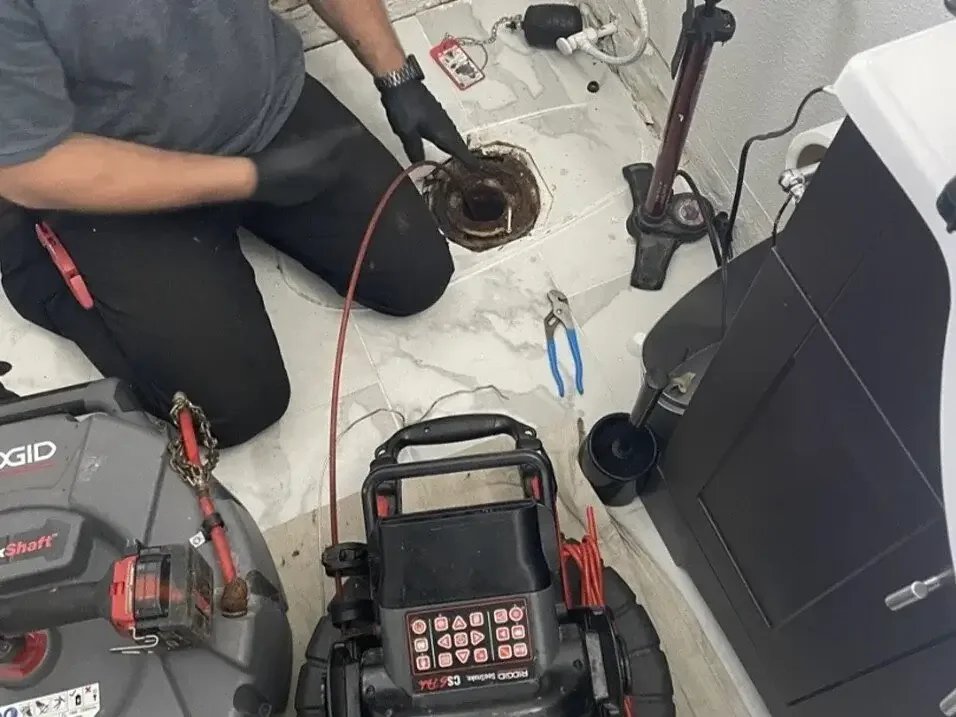
A camera inspection helps show whether a recurring clog is local, part of a buildup pattern, or connected to a damaged sewer lateral.
What hydro jetting does differently
Hydro jetting uses controlled, high-pressure water through a specialised nozzle. The nozzle is sent through the line on a hose, and the water is directed to move debris downstream while cleaning the inside surface of the pipe.
The important distinction is coverage. A cable can create an opening through a blockage. Hydro jetting is intended to remove residue from more of the pipe wall. It is often useful for grease in kitchen lines, soap and sludge in branch drains, mineral scale in older pipes, and repeat buildup in a sewer lateral that is otherwise sound.
The City of London specifically lists grease as one reason a sanitary lateral can become blocked. It also notes that a Private Drain Connection blocked by grease may work properly again once the obstruction is removed.[1] That is a useful reminder for homeowners who jump straight to replacement because a main line has been slow. A dirty pipe and a broken pipe are not the same problem.
Hydro jetting can be thorough, but it is not a universal answer. Strong water pressure should not be sent blindly into a line that may already be cracked, brittle, badly offset, or partially collapsed. A local London hydro-jetting guide makes the same point: older or root-damaged pipe should be inspected with a video camera before the method is chosen.[3]
Hydro jetting is worth discussing when
- The same kitchen, laundry, or main drain clogs repeatedly after snaking.
- Multiple fixtures are slow, especially when the lowest drains react first.
- The camera shows grease, sludge, soap buildup, or scale rather than a collapsed pipe.
- A sewer lateral has small root intrusion but the camera shows that the pipe is still structurally sound enough for cleaning.
- The goal is to prepare a pipe for a clearer follow-up camera inspection or for a repair option such as lining.
NASSCO describes cleaning as a way to restore available capacity and to allow a more complete CCTV inspection. It also identifies roots and grease as common reasons pipes are cleaned.[2] For a homeowner, that means the cleaning itself can be part of the diagnosis. Once buildup is gone, the camera may reveal the condition of the pipe underneath.
The quick comparison before you agree to a service
| What you are dealing with |
Drain snaking |
Hydro jetting |
What should come first |
| One slow shower, tub, or bathroom sink |
Often a sensible first step |
Usually unnecessary for a first local clog |
Confirm the issue is limited to one fixture |
| Toilet paper, hair, or a small foreign-object clog |
Often useful |
Usually not the first choice |
A local clearing attempt |
| Kitchen drain that keeps slowing after temporary clearing |
May create temporary flow |
Often better at removing grease and food residue buildup |
Assess the line and its condition |
| Several drains slow, toilet gurgling, or floor-drain activity |
May be used to restore flow |
May help if the pipe is sound and buildup is the cause |
Camera inspection of the shared path |
| Roots at old clay-pipe joints |
Can cut some roots |
Can clear smaller root intrusion and residue |
Camera inspection to assess joints and pipe condition |
| Cracked, offset, bellied, or collapsed pipe |
Will not repair the defect |
Will not repair the defect and may be inappropriate |
Repair planning after a camera diagnosis |
The final column is the one that protects you. The tool should follow the diagnosis. A contractor who can show you the camera footage, explain the cause in plain language, and tell you why a snake or jet is appropriate is giving you something more useful than a generic recommendation.
Why a camera inspection comes before more pressure
There is a natural fear around the words "high pressure." Homeowners worry that hydro jetting will damage a pipe. That fear should not be dismissed, but it needs context.
Properly selected equipment is used to clean sound pipe. The risk rises when nobody has established whether the pipe is sound. Older London homes can have clay, cast iron, or other aging drain materials. Roots may be getting in through a separated joint. A line may look like a cleaning problem from inside the house while a camera shows an offset or a sag outside.
The camera should answer practical questions before a service is recommended:
- Is the line passable?
- Is there buildup on the pipe wall, or is there a hard structural restriction?
- Are roots entering at a joint?
- Is the pipe cracked, shifted, crushed, or holding standing water?
- Is the issue on a small interior branch, the building sewer, or the Private Drain Connection?
The point is not to turn every slow drain into a large investigation. One local drain can often be cleared directly. The point is to slow down when the same problem keeps returning or when several fixtures are involved. That is when a sewer camera inspection can keep you from paying for repeat cleanings that never address the cause.
If you are seeing gurgling, odour, several slow drains, or a floor drain that reacts when the washing machine empties, compare your symptoms with our hidden sewer warning-sign checklist. It helps separate a single clogged fixture from a shared drain-path problem.
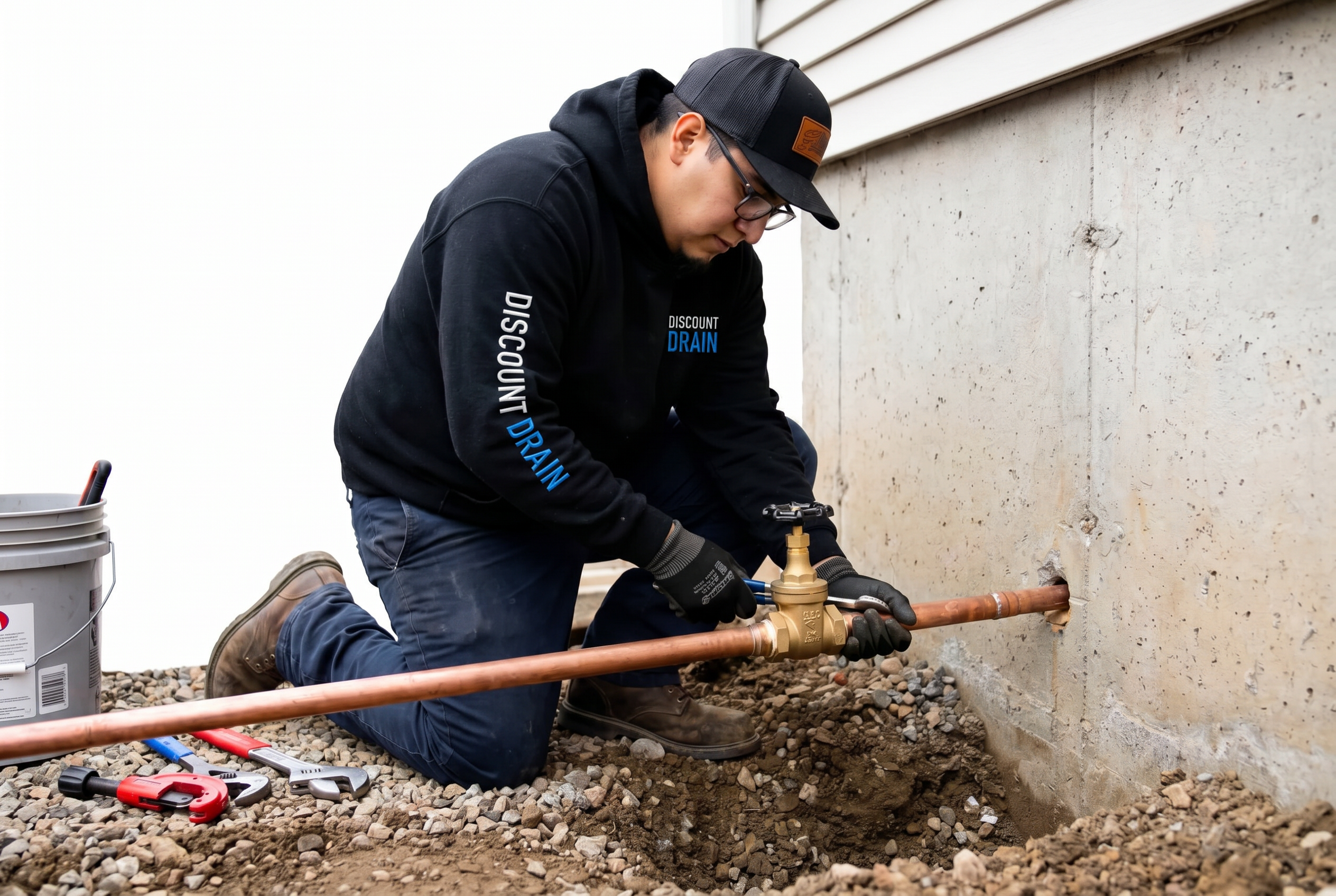
A camera-first diagnosis can show whether a recurring clog comes from buildup that can be cleaned or a defect that needs a different plan.
When cleaning will not solve the recurring clog
This is the part that nobody wants to hear, but it is better to hear it from a camera result than after a basement backup.
Neither drain snaking nor hydro jetting repairs a pipe. Both methods can restore flow. Neither one seals a cracked joint, corrects a poor slope, reconnects an offset section, or rebuilds a collapsed line. A line can drain beautifully on the day it is cleaned and still have a condition that will catch debris again next month.
Signs that the discussion may need to move past cleaning include a camera that cannot pass a section, a visible collapse, a deep belly where water and solids sit, a large offset, or roots returning through badly separated joints. In those situations, the right answer may be a spot repair, trenchless pipe repair, or sewer repair and installation.
The repair should match the defect. If the pipe remains open and structurally suitable, lining can sometimes renew the inside without opening a driveway or finished basement. If the line has a collapsed section or a major slope problem, excavation may be the honest recommendation. Our sewer lining versus replacement guide explains why a camera result should decide that choice.
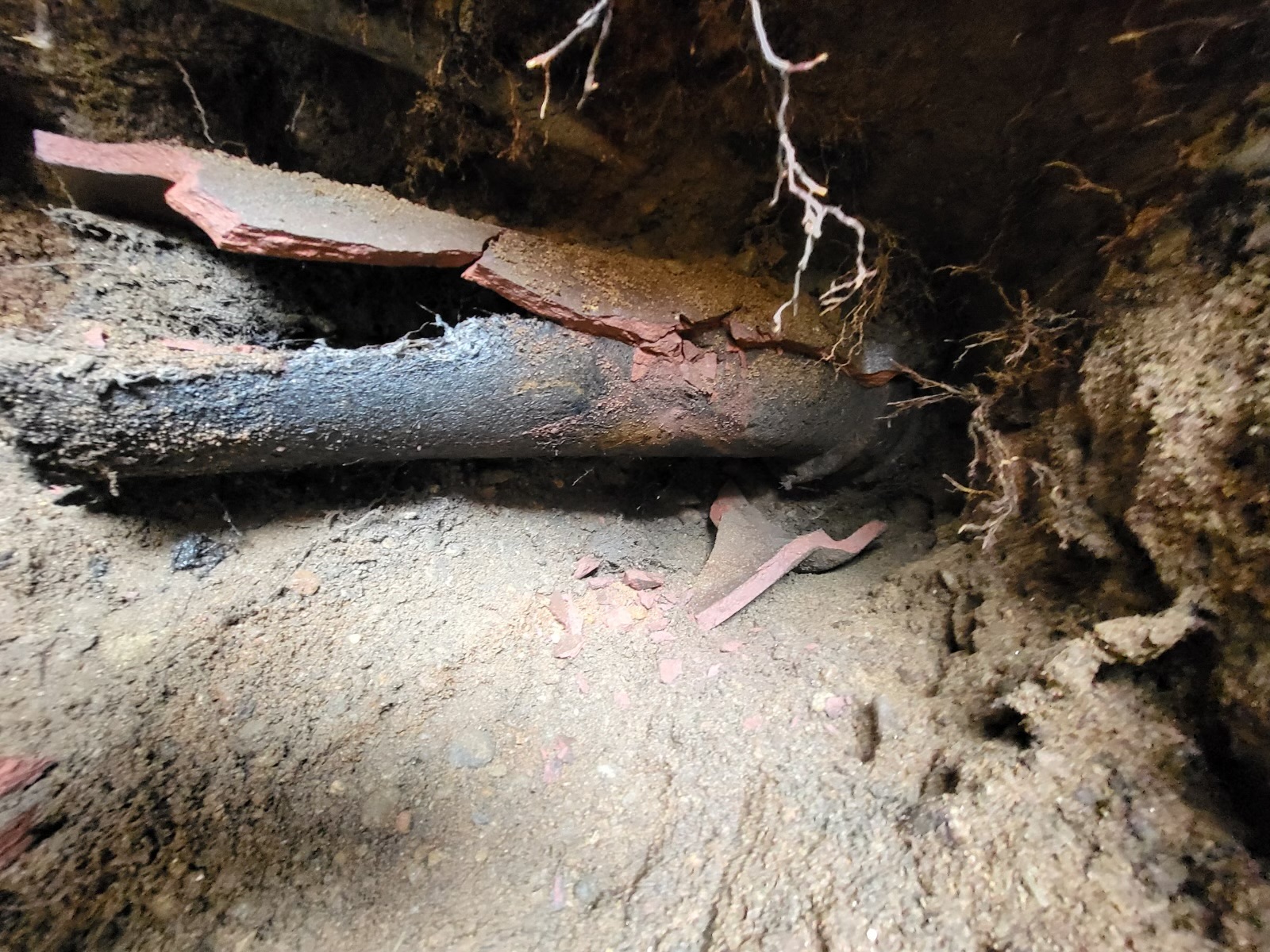
Cleaning can remove a blockage. It cannot correct a pipe that is cracked, severely offset, or collapsed.
The London question: could this be your Private Drain Connection?
If the issue is in the sanitary lateral that runs from the house toward the City sewer, London homeowners need to understand the boundary before agreeing to major work.
The City says the homeowner is financially responsible for the entire sanitary lateral, including the building sewer on private property and the Private Drain Connection, or PDC, from the property line to the municipal main.[1] The City is responsible for the main sewer in the roadway.
That does not mean every recurring clog is a PDC problem. A kitchen branch line can clog. A bathroom drain can be local. But if the camera shows the restriction is farther out in the shared line, the PDC question becomes relevant. Knowing the location helps you ask the right questions about permits, repair options, and City coordination.
The City also says it may inspect and clean the PDC as part of its renewal service after payment, then determine whether the pipe should be open-cut replaced, pipe-burst replaced, or lined.[1] That sequence follows the same principle: see the condition, clean if appropriate, then choose the repair method.
For a plain-language explanation of the ownership boundary, read Who Is Responsible for Your Sewer Line in London, Ontario? and our guide to the Private Drain Connection.
Questions worth asking before you approve hydro jetting
You do not need to become a drain technician to ask reasonable questions. If the issue keeps returning, ask the person at your home to explain the recommendation in a way you can use later.
Ask whether the camera has confirmed that the pipe is sound enough for hydro jetting. Ask whether the problem is on a branch line or the main sewer lateral. Ask what the camera shows on the pipe wall. Ask whether roots, grease, scale, a broken joint, or a low spot are involved. Ask to see the footage or receive a written summary.
Then ask a question that can save money: "If this is cleaned today, what would make you expect it to return?"
An honest answer may be "nothing, this was a one-time local clog." It may be "the grease buildup needs a deeper cleaning." Or it may be "the pipe is damaged and cleaning will only buy time." Those are very different situations, and they should not be sold as the same service.
A calmer next step for a drain that keeps coming back
When a drain keeps clogging, homeowners often feel pushed toward one of two bad choices. They either keep paying for the same temporary clearing, or they assume the house is heading for a major sewer replacement.
There is a more sensible middle step. Get the line assessed. If the pipe is sound and buildup is the problem, professional drain cleaning or hydro jetting may be the right way to restore flow. If the camera finds a defect, you can discuss repair options with evidence in front of you.
That is especially important in London, where the private lateral can carry a real financial responsibility. The goal is not to sell a jet, a snake, or an excavation. The goal is to stop spending money on a problem that has not been properly identified.
If you are dealing with a recurring clog in London or Southwestern Ontario, call 519-451-8342 or request a free quote. For urgent backups, call rather than waiting for an online response. Discount Drain can assess the drain path, use a camera when the symptoms warrant it, and explain the next step in plain language.
Frequently asked questions
Is hydro jetting better than drain snaking?
Hydro jetting is not automatically better. It is more thorough for buildup along the pipe wall, such as grease, sludge, soap residue, and scale, when the pipe is structurally sound. A drain snake is often the better first choice for a single, new, local clog caused by hair, paper, or a small obstruction. The camera result and symptom pattern should decide the method.
Can hydro jetting clear tree roots?
Hydro jetting can clear smaller root intrusion and wash away debris around it. It does not stop roots from returning through a cracked or separated joint. If roots are visible on the camera, ask what condition allowed them into the pipe and whether cleaning, monitoring, lining, or a repair is the sensible next step.
Why does my drain clog again after it was snaked?
The cable may have opened a path through the obstruction without removing the grease, scale, sludge, or root material around it. A recurring problem can also come from a structural condition such as an offset joint, low spot, crack, or collapse. A camera inspection can separate those possibilities.
Can hydro jetting damage old pipes?
It can be inappropriate for a pipe that is already brittle, badly cracked, shifted, or collapsed. That is why pipe condition should be assessed first when the issue is recurring, widespread, or connected to an older sewer lateral. The right equipment and pressure depend on the pipe and the buildup present.[2] [3]
Does hydro jetting repair a sewer pipe?
No. Hydro jetting is a cleaning method. It does not repair a broken joint, a belly, an offset, or a collapse. If the camera shows structural damage, review the evidence and discuss repair options such as a targeted repair, lining, or replacement.
Sources
[1] City of London: Sewers and wastewater
[2] NASSCO: Maintenance
[3] London Plumbing Solutions: Hydro Jet Drain Cleaning Services in London
[4] Arrow Sewer and Drain: Hydro Jetting vs. Snaking