A sewer smell in the house is not always a major sewer repair, but the pattern matters. Learn how to separate a dry basement floor drain from warning signs such as gurgling fixtures, multiple slow drains, and a damaged sewer lateral.
Why does my house smell like sewer gas in London, Ontario? A homeowner's guide
There is a moment most homeowners recognize. You walk past the basement laundry room, the guest bathroom, or the furnace area and catch a smell that makes you stop. Not mildew. Not yesterday's garbage. Something sharper and more unsettling.
You may check the garbage, open a window, light a candle, and tell yourself you will deal with it on the weekend. That is understandable. A sewer smell feels awkward to talk about, and nobody wants to hear that there may be a problem under the floor or out in the yard.
The good news is that a sewer smell does not automatically mean a collapsed pipe or a major excavation. A floor drain that has not seen water in months can lose its seal. A toilet seal can fail. A sink overflow can hold debris. Those are real, common causes.
But the smell deserves a closer look when it keeps coming back, gets stronger after rain, appears with gurgling, or joins several slow drains in the same house. That is when your home may be telling you the issue is no longer limited to one fixture.
This guide will help you sort the simple possibilities from the patterns worth investigating. It will not diagnose a sewer line from a webpage. It will help you make a calmer, more informed next decision.
A practical safety note: If wastewater is coming up through a floor drain, toilet, shower, or laundry sink, stop using water in the house. The City of London asks residents to report active basement flooding so it can check whether the municipal main is functioning as designed. If the issue is within the private sanitary lateral, a qualified drain contractor can locate the blockage and advise on the next step.[1]
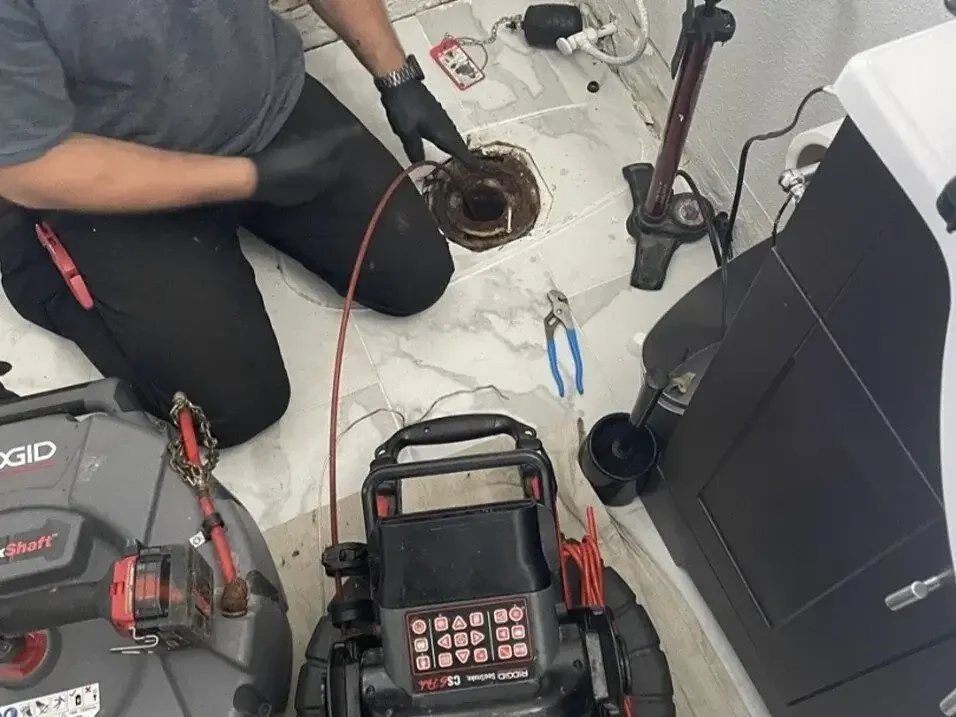
A sewer camera inspection helps separate a recurring indoor odour from a blockage, root intrusion, or damage farther along the drain path.
Start with the pattern, not the smell alone
Sewer odours are frustrating because your nose can tell you something is wrong without telling you where it started. The useful clues are not just what the smell is like. They are when it appears, where it is strongest, and what the plumbing is doing at the same time.
| What you notice |
What it may point to |
A sensible next step |
| Odour is strongest at one unused basement floor drain, shower, or sink |
A dry trap may no longer be holding its water seal |
Refill the trap with water and see whether the smell stays away |
| Odour stays near one bathroom toilet |
A loose toilet seal, local drain buildup, or a venting issue |
Look for a rocking toilet or moisture at the base, then book a fixture assessment if it persists |
| Rotten-egg smell appears only when hot water runs |
A water-heater issue may be more likely than a sewer issue |
Have the hot-water system assessed rather than assuming the drain is the cause |
| Smell appears with gurgling, several slow drains, or a backing-up floor drain |
A shared drain path, venting concern, or sanitary lateral problem |
Book a sewer camera inspection rather than repeatedly guessing |
| Smell gets worse after heavy rain or comes with basement water |
Rainwater, a blocked lateral, or a sewer backup pattern |
Follow the City flooding steps and arrange a drain assessment[1] |
One slow bathroom sink can be hair and soap. One dry floor drain can be a simple water-seal problem. The concern rises when several fixtures start behaving differently at once. That is the dividing line many homeowners miss because each symptom seems small when viewed alone.
1. The basement floor drain that has quietly dried out
This is the simplest possibility and it is worth checking first.
Most drains have a curved section of pipe called a trap. It holds water, and that small amount of water acts like a gate between your living space and the drainage system below. When a basement floor drain, guest shower, laundry sink, or rarely used bathroom sits unused for a long time, the water can evaporate. The gate is gone, and odour can move upward.
Dry traps are especially common in the parts of a home people do not use every day. A finished basement with a decorative floor drain, a spare bathroom, an older laundry room, or an unfinished utility area can all be candidates. Industry guidance consistently identifies dry traps as a common reason for indoor sewer-like odours.[2] [3]
If the smell is strongest at one of those drains and there are no other warning signs, run water into that fixture long enough to restore the trap seal. Then give it time. If the odour disappears and stays gone, you may have found the answer.
That is not a reason to force an expensive service call. It is a reason to pay attention to what happens next. If the smell returns quickly, the drain does not hold water, or you hear gurgling when another fixture drains, the story may be bigger than an unused trap.
2. A sewer smell in the bathroom is often a seal or venting clue
Bathroom odours can feel personal because they show up in a room that should feel clean. They also lead homeowners down the wrong path. People scrub the toilet, replace air fresheners, and clean the sink, while the actual problem may be under the toilet or inside the plumbing system.
The first thing to notice is the location. If the smell is strongest right at the toilet base, a compromised toilet seal is one possibility. The seal between the toilet and the drain connection is meant to stop water and gases from escaping. A toilet that rocks, has been removed for flooring work, or shows moisture around its base deserves a proper inspection. Do not keep tightening bolts or adding caulk to hide a problem you have not located.
Venting can create a different pattern. Plumbing vents help air move through the drainage system so fixtures drain without pulling water out of the traps. Technical plumbing guidance describes the same principle: the system needs controlled airflow to protect the trap seal.[4] When that airflow is disrupted, homeowners may notice a toilet or sink gurgle when another fixture is used, an intermittent odour, or a trap that seems to dry out sooner than it should.
The useful question is not “Which bathroom smells?” It is “What else happens when the smell appears?” If the bathroom smells on its own, the issue may be local. If the smell arrives with gurgling from the basement sink or slow drainage in more than one room, it is time to look beyond the bathroom.
3. When the smell is coming from the drain itself
Not every bad drain smell is sewer gas. Organic buildup inside a sink, shower, or overflow opening can smell foul as it sits in a warm, damp pipe. Hair, soap residue, food particles, and grease can all contribute. That is one reason a kitchen sink may smell different from a basement floor drain, even though both are unpleasant.
There is a practical difference between a local buildup and a shared-line problem. Local buildup tends to stay local. You notice it at one sink or shower. The fixture may drain a bit slowly, but toilets and lower-level drains are normal. In that case, professional drain cleaning may be the right service, particularly if the problem keeps returning.
A shared-line issue usually gives you more than one clue. Several drains are slow. The toilet bubbles. The laundry sink makes noise when someone showers. A floor drain reacts when the washing machine empties. Those patterns deserve a closer look because they can point to a restriction farther downstream.
If you are unsure which kind of issue you are seeing, compare the symptoms with our hidden sewer warning-sign checklist. It is designed for the homeowner who does not want to call every slow drain a disaster, but also does not want to miss the moment when a small nuisance becomes a basement backup.
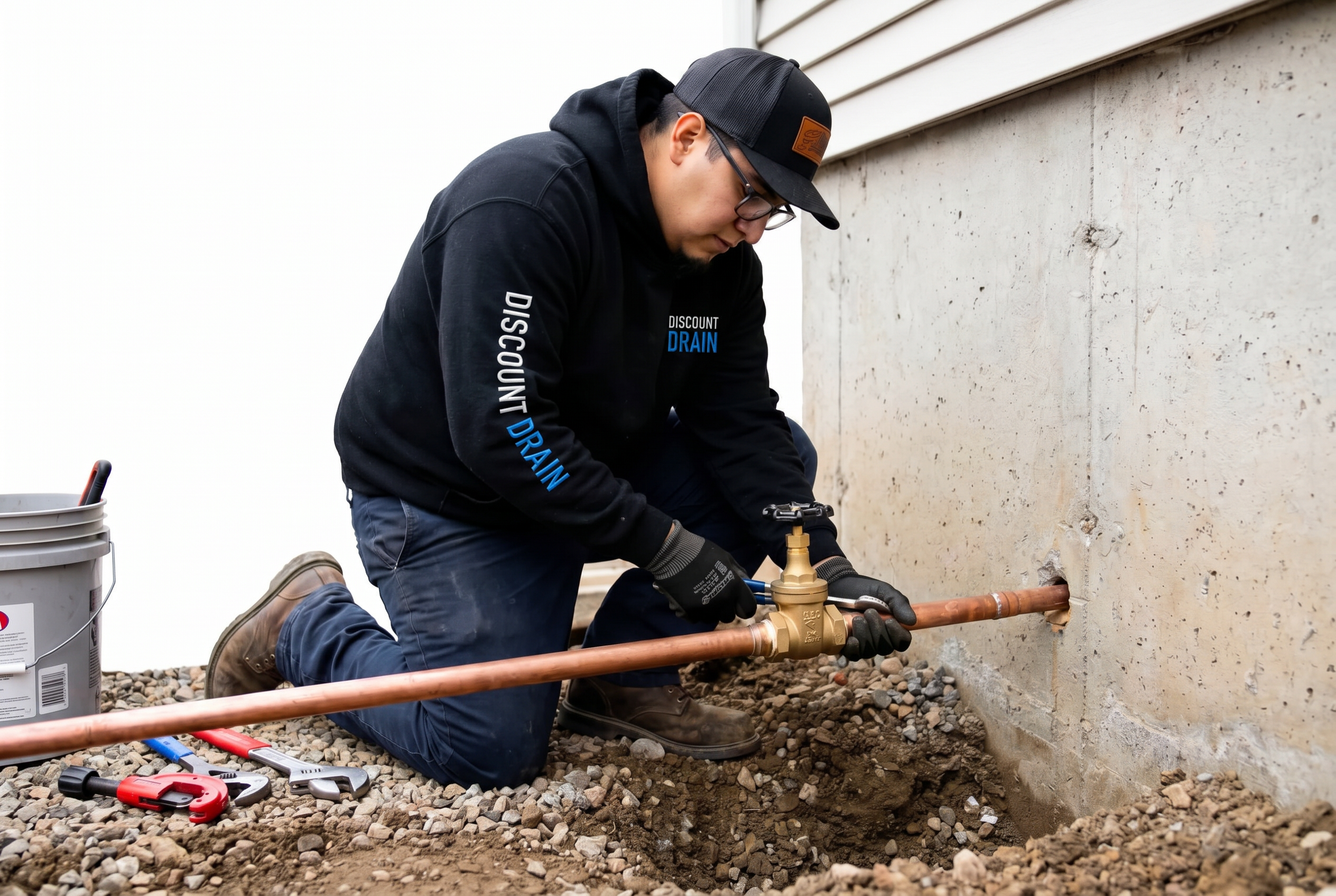
When an odour appears with several slow fixtures or floor-drain activity, a camera can show whether the shared drain path is clear.
4. The signs that point beyond one drain
This is the part homeowners often wish they had known earlier. A damaged or obstructed sewer lateral rarely announces itself with one dramatic event. It often gives small warnings that are easy to explain away.
Watch for combinations, especially if they are new:
- A sewer smell that returns after you refill a dry trap or clean a local fixture.
- Slow draining in more than one bathroom, the kitchen, or the laundry area.
- Gurgling from a toilet, shower, or sink when another fixture drains.
- A basement floor drain that smells, bubbles, or backs up after laundry, showers, or heavy rain.
- A wet or unusually green strip in the yard along the route from the house toward the street.
- Recurring clogs that improve briefly after cleaning, then return.
London homeowners have a local reason to take that pattern seriously. The City says the homeowner is responsible for the entire sanitary lateral, including the building sewer on private property and the Private Drain Connection leading to the municipal main.[1] Roots, grease, wipes, other objects, deterioration, and pipe collapse can all block that path.[1]
That does not mean every sewer smell means the lateral has failed. It means a repeat pattern should be investigated before you spend money on the wrong fix. A camera inspection can show whether you are dealing with roots, a buildup, an offset joint, a crack, a belly in the line, or something else entirely. It is the difference between a recommendation and a guess.
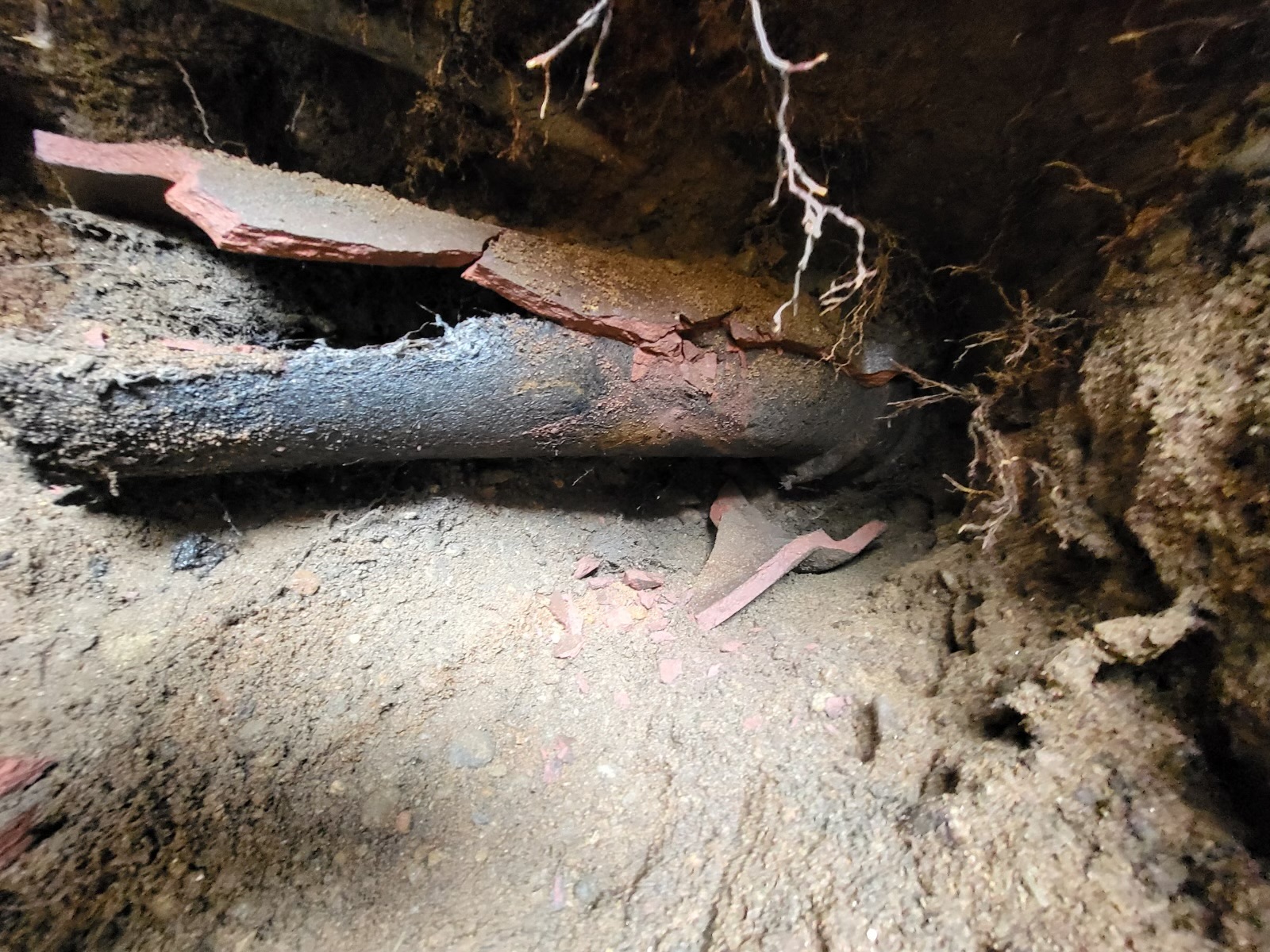
Older clay sewer pipes can develop cracks, offsets, root intrusion, and collapses that a camera inspection can identify before a repair plan is chosen.
5. Why the smell may show up after rain in London
If a sewer odour shows up after heavy rain, do not assume the house is simply damp. Rain can expose a drainage issue that is quiet during dry weather.
The City of London estimates that approximately 50,000 homes have weeping tiles directly connected to the sanitary sewer. During heavy rainfall, those connections can add enough water to overwhelm parts of the system and contribute to basement flooding, sewer overflows, and bypasses.[1] In older homes, the connection between rain, groundwater, and the sanitary system is not always obvious from inside the basement.
For a homeowner, the practical question is simpler. Did the smell appear after rain by itself, or did it arrive alongside a bubbling floor drain, slow toilet, damp basement area, or sewage-like water? If it is only an unused floor drain that smells during a dry spell, start with the water seal. If rain seems to trigger several plumbing symptoms, review our guide on why a basement floods only when it rains in London and arrange an assessment before the next storm tests the system again.
The City also offers a Basement Flooding Grant Program for qualifying flood-prevention improvements, including measures related to weeping-tile disconnection, sump systems, and backwater valves.[1] That program is prevention support, not a diagnosis. It is still important to identify whether the problem is surface water, a sump issue, a backed-up lateral, or a condition inside the house.
6. A simple decision path for homeowners
You do not need to take apart your plumbing to respond intelligently. Start with the pattern you can see.
You can start with a simple check when
The smell is limited to one rarely used fixture, there are no slow drains or gurgling sounds, and the problem disappears after restoring water to the trap. Make a note to run water through unused drains periodically. If it returns, move to the next step instead of treating it as a permanent fix.
Book an assessment soon when
The smell keeps coming back, is strongest near a toilet or basement floor drain, appears after rain, or comes with recurring clogs. This is where a sewer camera inspection is useful. It can rule out a hidden restriction before it becomes a backup and can show whether cleaning, repair, lining, or no sewer work at all makes sense.
Stop using water and call when
Water or wastewater is rising through the lowest drain, toilet, shower, or laundry sink. Avoid adding more water to the system. In London, report active basement flooding to the City so it can check the municipal sewer main, then contact a qualified drain contractor if the issue lies within the sanitary lateral.[1]
That sequence protects you from two bad outcomes: treating a serious sewer issue like a candle problem, or treating a simple dry trap like a full excavation problem.
What a proper camera inspection changes
Many homeowners are nervous about calling because they expect a contractor to arrive with a shovel and a large quote. A camera-first approach should work the other way around.
The purpose of a sewer camera is to see the actual condition of the line before a repair recommendation is made. If the pipe is clear and the problem is a trap, toilet seal, or venting issue, the camera helps rule out unnecessary sewer work. If the camera finds roots, a collapsed section, or a deteriorating lateral, you have evidence to discuss rather than an explanation you have to take on faith.
If damage is confirmed, there may be more than one path. Some pipes can be cleaned and monitored. Some can be lined with far less excavation. Some truly need replacement. Our guide to sewer lining versus sewer replacement in London explains why the camera result, not the sales pitch, should determine that choice.
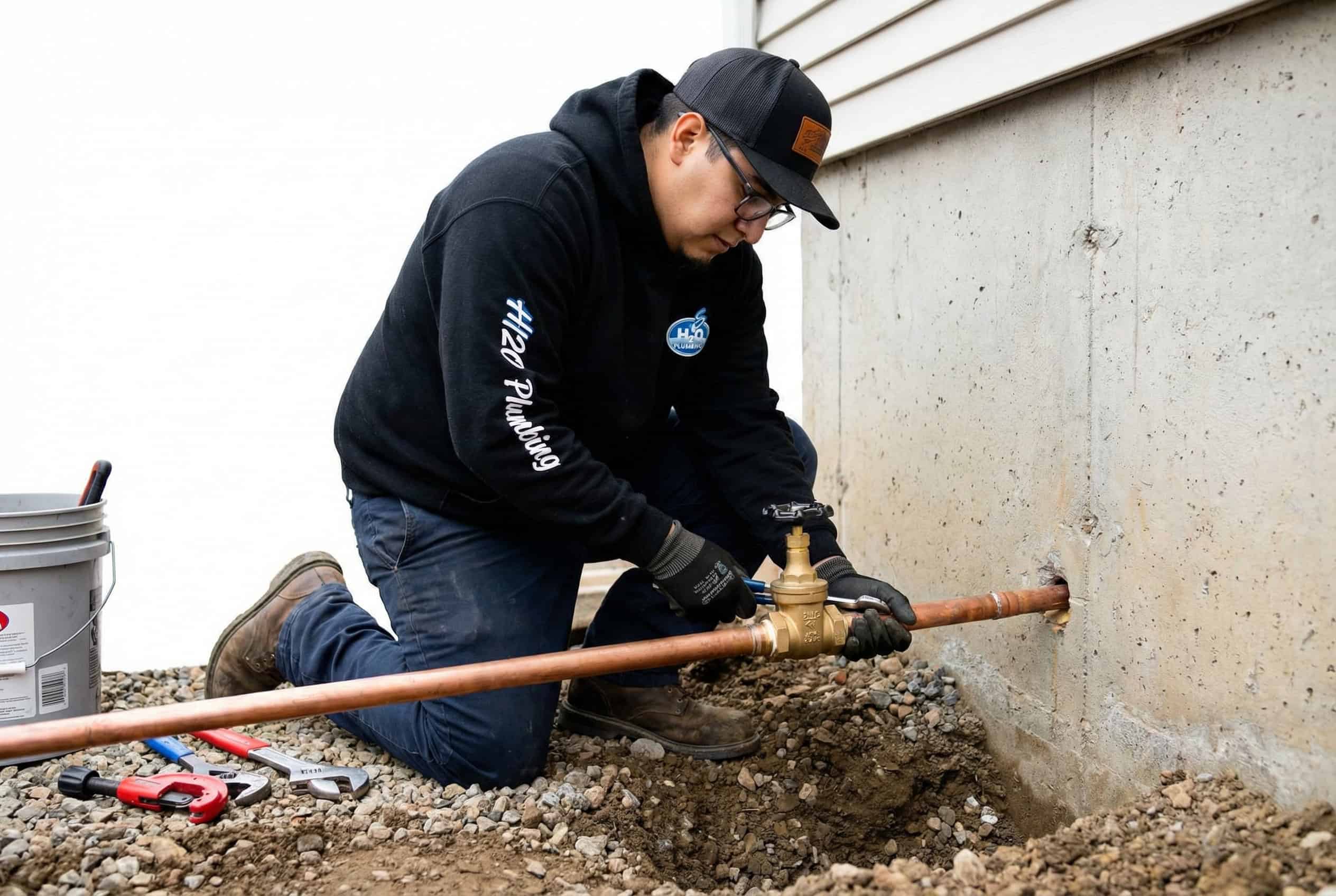
When a camera confirms a damaged lateral, the repair method should follow the condition of the pipe, the location of the damage, and the property above it.
Do not let an odour decide your insurance conversation for you
An odour alone does not tell you what an insurer will cover. Coverage often turns on the source of the damage, the policy endorsements in place, and whether there was resulting water damage, not simply on the fact that a sewer pipe was old or smelled bad. If the situation moves beyond a smell and into a backup or pipe failure, read our local guide: Does home insurance cover a sewer backup or collapsed pipe in London?
The same applies to responsibility. The City may check the municipal main during an active flooding event, but a blockage between the home and the main is generally the homeowner's responsibility in London.[1] Our Private Drain Connection guide explains that boundary in plain language.
The bottom line
A sewer smell is not something to be embarrassed about. It is information. Sometimes it tells you a drain has been ignored. Sometimes it tells you a toilet seal or vent needs attention. Sometimes it is the first clue that the main drain or sewer lateral is not carrying water the way it should.
Pay attention to the pattern. One unused floor drain and no other symptoms is different from a basement smell that appears with gurgling, slow drains, rain, or floor-drain activity. The more clues that line up, the more useful it is to see what is happening inside the pipe.
If you are dealing with a recurring sewer smell in London, Ontario, call 519-451-8342 or request a free assessment. Discount Drain will start with the problem you actually have, not the repair someone hopes to sell you.
Frequently asked questions
Why does my basement smell like sewer when I do laundry?
The washing machine sends a large volume of water into the drain quickly. If the laundry drain, shared drain path, or nearby floor drain has a restriction or venting problem, that discharge can reveal it through gurgling or odour. If the smell only occurs when the washer drains, it is worth checking the local laundry connection and considering a camera inspection if other fixtures are also slow.
Can a dry floor drain really make the whole basement smell like sewer?
Yes. A floor drain trap is meant to hold water that blocks gases from the drain system. If that water evaporates, odour can enter the room. Refill the trap and monitor it. If the odour returns quickly or the drain behaves oddly when other fixtures are used, there may be another issue to investigate.[2] [3]
Why does my bathroom smell like sewer only sometimes?
Intermittent odours can happen when a trap is partially dry, when pressure changes affect a weak venting setup, or when a toilet seal is compromised. The timing matters. Note whether the smell occurs after flushing, showering, laundry, a rainstorm, or a long period without using the room.
Does a sewer smell mean my sewer line is broken?
No. A dry trap, a toilet seal, an organic buildup, or a venting issue can all create a sewer-like smell. A broken or obstructed sewer line becomes more likely when the odour is joined by multiple slow drains, gurgling, recurring main-line clogs, floor-drain activity, or a backup. A camera inspection is the most direct way to know.
What should I do if a floor drain smells like sewer after rain?
If the drain has not been used recently, refill the trap with water and observe. If the odour follows heavy rain and comes with bubbling, slow drains, or water movement in the floor drain, treat it as a possible drainage or sanitary-lateral issue. Review the City's flooding instructions and arrange an inspection if the pattern repeats.[1]
Sources
[1] City of London: Sewers and wastewater
[2] Oatey: Why Does My House Smell Like Sewer Gas?
[3] Make It Right: What Causes a Sewer Smell in the Bathroom?
[4] International Code Council: Methods of Venting Plumbing Fixtures and Traps