Emergency
5 min
Sewer Backup: What to Do Right Now (Ontario Emergency Guide)
A sewer backup is a health emergency. Here is exactly what to do in the first hour and how to prevent it from happening again.
Read More
Free Sewer Video Camera Inspection, at no charge. Call 519-451-8342
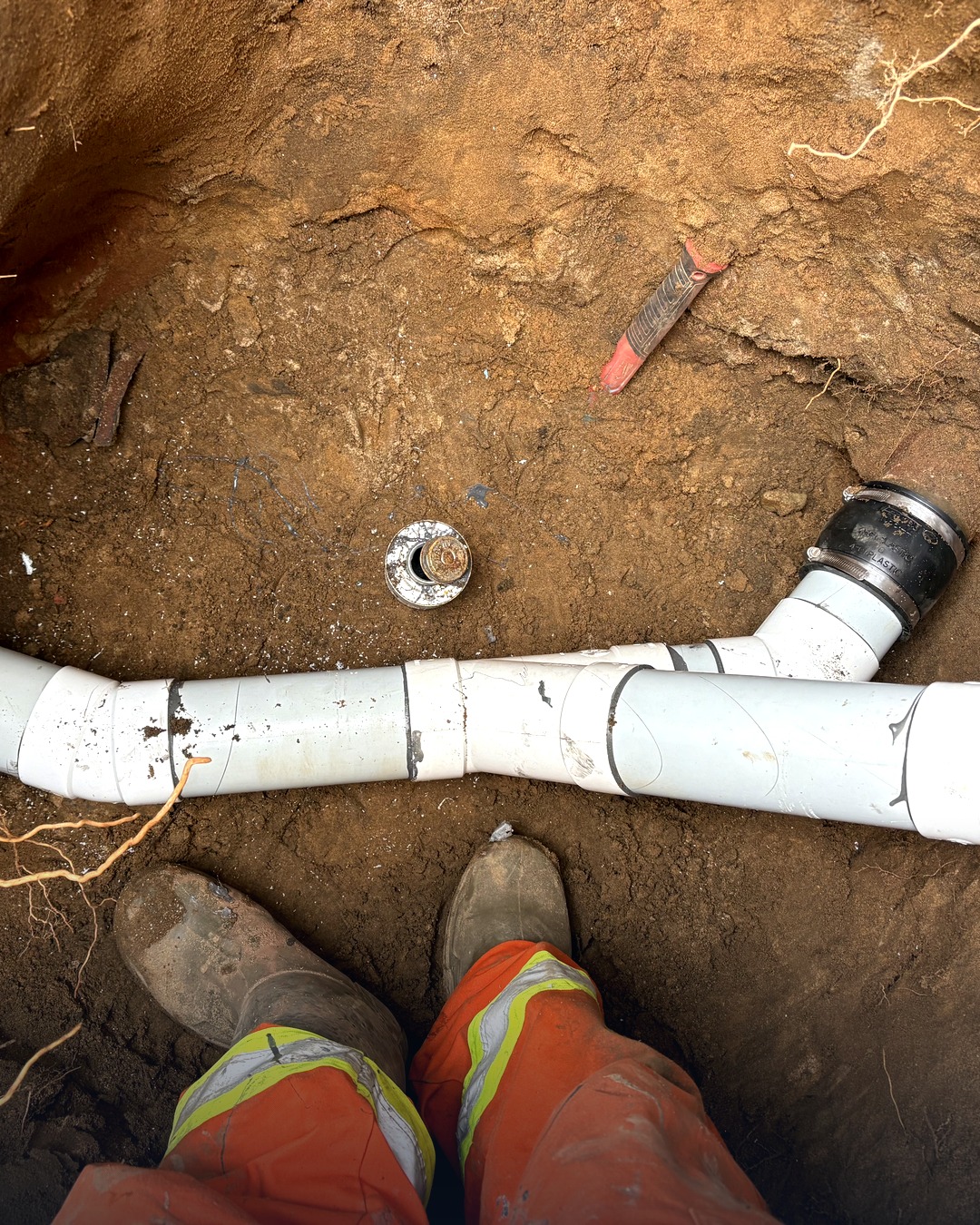
Water at an outdoor sewer cleanout can be alarming. Learn what to do first, what not to touch, when London can check the municipal main, and why a visible overflow does not identify the cause by itself.
Most people do not spend much time thinking about the sewer cleanout. It is a cap near the front of the house, a fitting in the basement floor, or perhaps something buried in a garden bed that you have never noticed.
Then one day there is water around it. Or worse, wastewater coming out of it.
That is the moment people start searching for answers while looking at a mess in the yard. Is the City sewer backing up? Did the pipe collapse? Is the cap the problem? Can you tighten it, put it back on, or run water to see whether it settles down?
Pause before you do any of that.
An overflowing sewer cleanout is a warning that the sewer path needs prompt assessment. It does not tell you, by itself, where the restriction is, whether the problem belongs to the City, or whether you are looking at a broken pipe. The cleanout is an access point into the line. When the line cannot move wastewater away as it should, that access point can become where the trouble shows itself.
This guide gives London homeowners a practical first response. It will help you avoid making the spill worse, give the right details to the people investigating it, and understand the local process without jumping to a costly conclusion.
If wastewater has entered your basement, or is near an electrical outlet, baseboard heater, furnace, or panel, do not enter the area. Call 911 from a safe location for an immediate electrical or life-safety concern, then call Discount Drain at 519-451-8342 for emergency sewer help. For active or recent basement flooding, our team can explain the City roadway-main check that may be part of the response.[2]
A sewer cleanout gives a qualified technician access to the line. It is not evidence, on its own, that one particular part of the sewer has failed.
If water or potentially sewage-contaminated wastewater is coming up through a cleanout, stop using water inside the home until the situation has been assessed. Do not flush toilets. Do not run taps to test the line. Hold off on showers, the dishwasher, and the washing machine.
That can feel inconvenient when there are people in the house and dinner is underway. But every flush and every drain cycle adds more water to a path that may already be restricted. A small outdoor spill can turn into a larger one, or the backup can find a lower point inside the house.
Keep children and pets away from the affected area. Treat the water as potentially contaminated until someone confirms otherwise. Health Canada advises extra precautions when sewage is involved because contact with contaminated water and materials can create health risks.[4]
There is one more action to avoid: do not remove, tighten, replace, cable, or "test" a cleanout cap while water is present around it. A cap can be holding back wastewater. Opening it can release more water, make the cleanup larger, and leave you with less control of the situation.
The City of London describes a cleanout as a direct access point to the building sewer and/or the Private Drain Connection. It allows a blockage somewhere between the house and the road to be accessed without digging up the front lawn.[1]
In many homes built within the last 45 years, the cleanout is near the front of the house under the basement floor, where the pipe exits the building. It may also be outside and buried. Older homes and renovated properties vary, so do not assume every round cap in the yard is a sewer cleanout or that every property has one in the same place.
Water coming up through a cleanout often means wastewater is not moving freely farther along the route. That can happen because of a blockage, a damaged section of pipe, or a problem farther downstream. The cleanout itself may also have a loose or damaged cap, but a cap is not usually the whole story when water is actively pushing out.
The City lists several reasons a sanitary lateral may become blocked: tree roots, grease buildup, wipes or other objects, a pipe collapse, or another obstruction.[1] Those are possibilities, not conclusions from a wet patch in the yard. A camera and a safe clearing plan are how a contractor separates them.
An overflowing cleanout can look decisive. It is not.
The location tells a technician that water is surfacing at an access point. It does not prove whether the restriction is in a branch line inside the house, the building sewer under private property, the Private Drain Connection, or the municipal main in the roadway. It also does not prove that roots, grease, rain, a collapse, or a damaged cap caused the event.
That uncertainty can be frustrating, especially when you are trying to decide whom to call. It is also what protects you from paying for the wrong repair.
Write down a few details while the event is fresh. You do not need to poke at the pipe or take anything apart. These observations can help the investigation:
| What to note | Why it helps |
|---|---|
| What was running right before the overflow | A toilet flush, washing-machine discharge, long shower, or no water use at all can help describe the timing |
| Whether more than one fixture was slow or gurgling | This may help distinguish a single fixture problem from a shared drain-path concern |
| Whether the flow stopped after water use stopped | It gives the technician a clearer picture of the event, without proving a cause |
| Whether the cap was already loose, tilted, or missing | It separates a visible cap issue from a new overflow event |
| Whether the problem followed heavy rain | Rain timing is useful context, but it does not establish responsibility |
| Whether neighbours are seeing a similar issue | It is useful information for the City, but one neighbour's experience does not diagnose your line |
Photos from a safe distance can also be useful. Include the area around the cap and the direction the water is travelling. Do not stand in wastewater to get a better angle.
This is a safety step that many homeowners have never heard about.
Before anyone uses mechanical clearing or cutting equipment, or high-pressure water jetting, to clear a blocked sewer outside the walls of the building, Ontario Dig Authority requires a free emergency sewer safety inspection.[3] Call Discount Drain at 519-451-8342 first. If exterior clearing is the right next step, our team will make sure the required sewer-safety process is handled before equipment goes into the line.
The reason is a rare but serious issue called a cross bore. A natural-gas line can, in some cases, have been installed through a sewer or septic line during past utility work. The pipes can coexist unnoticed for years. If clearing equipment damages the gas line, natural gas can enter the sewer path and create an immediate risk.
The inspection is free, available 24 hours a day, and treated as an emergency call. It applies even if your property does not have natural-gas service, because the risk relates to the buried line, not the bill in your name.[3]
If you smell gas, hear hissing, or see unusual bubbling near the work area, leave the area. Do not operate equipment, vehicles, switches, or phones nearby. Call 911 from a safe location.[5]
This is not a reason to delay a needed repair. It is a reason to get a clear line safely.
If water or wastewater has backed into your basement, or you have recently experienced basement flooding, call Discount Drain at 519-451-8342. The City of London has a process to determine whether the sanitary sewer main under the road is functioning properly, at no cost to the homeowner.[1] We can help you understand whether that roadway-main check belongs alongside the urgent private-side assessment.
That inspection is valuable, but it is specific. It checks the City main. It does not mean the City has accepted responsibility for the private-side line, the cleanout, interior plumbing, cleanup, or every repair that may follow.
London handles responsibility differently than many homeowners expect. The City says the homeowner is financially responsible for the full sanitary lateral: the building sewer on private property plus the Private Drain Connection, or PDC, between the property line and the City main. The City is responsible for the sanitary main in the roadway.[1]
If the City main is working normally, a qualified drain contractor can investigate the private side. If the issue is farther out in the PDC, there may be permits, City coordination, and repair options to consider. Our plain-language guide to London’s Private Drain Connection explains that boundary in more depth. For the broader ownership question, see Who Is Responsible for Your Sewer Line in London?.
Once the line has been approached safely and can be viewed, a sewer camera inspection can move the discussion from guesswork to evidence. A camera may show buildup, root intrusion, a separated joint, a cracked section, a low spot holding debris, or a restriction that needs a different response.
Sometimes the answer is routine cleaning. The City notes that a PDC blocked by grease may work properly again after the blockage is removed.[1] Other times, the camera shows a condition cleaning cannot solve, such as a collapse or a major break.
The sequence matters. A line may need controlled clearing before a camera can travel far enough to show the pipe wall. Once the view is clear, the footage helps answer whether you are dealing with a cleaning issue, a repair issue, or a location question that needs City involvement.
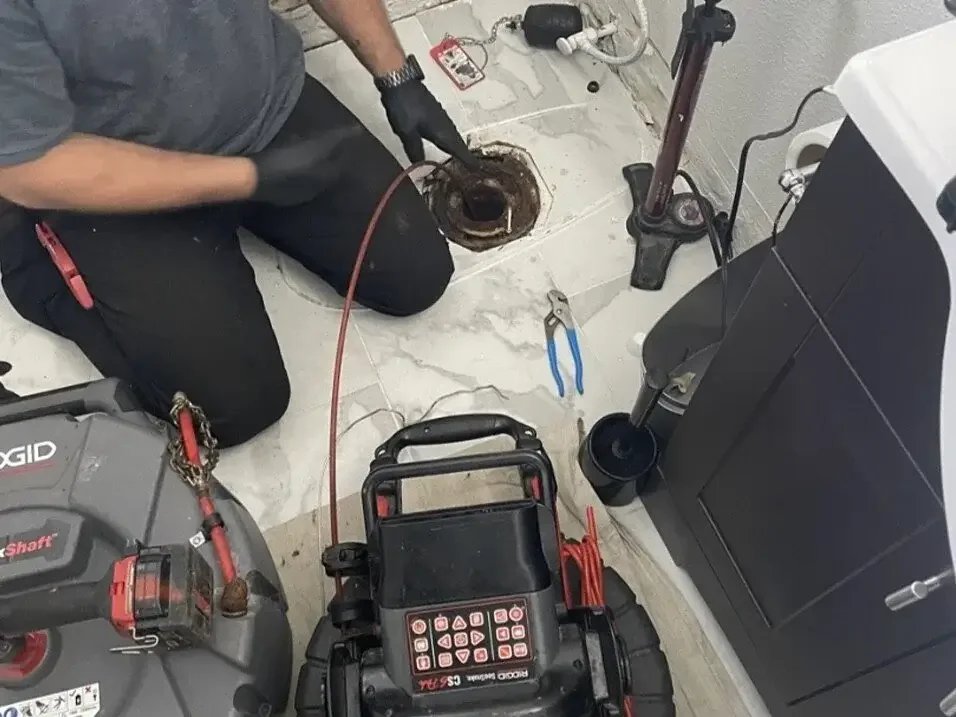
A camera assessment can show what remains after access is restored. It should guide the next recommendation rather than serve as a prop for one.
Ask to see the footage or receive a written description of what was found. Good questions include:
Those questions do not make you difficult. They help keep a stressful service call clear and documented.
Water at a sewer cleanout can make every solution sound urgent. Some problems do need immediate action. That still does not make every recommendation the same.
Professional drain cleaning can remove a blockage and restore flow when the pipe itself remains sound. Hydro jetting can be useful for certain buildup patterns, but it is not a repair for a crack, a shifted joint, a belly, or a collapsed pipe. It should follow the sewer-safety check when exterior high-pressure clearing is planned. Our hydro jetting versus drain snaking guide explains how the right method depends on what the line can safely handle.
If the camera shows a structural defect, the next discussion may be about trenchless pipe repair, a targeted repair, or sewer repair and installation. The footage should drive that choice. A damaged pipe found on another job does not mean your line has failed, and a cleared line does not automatically mean its condition is sound.
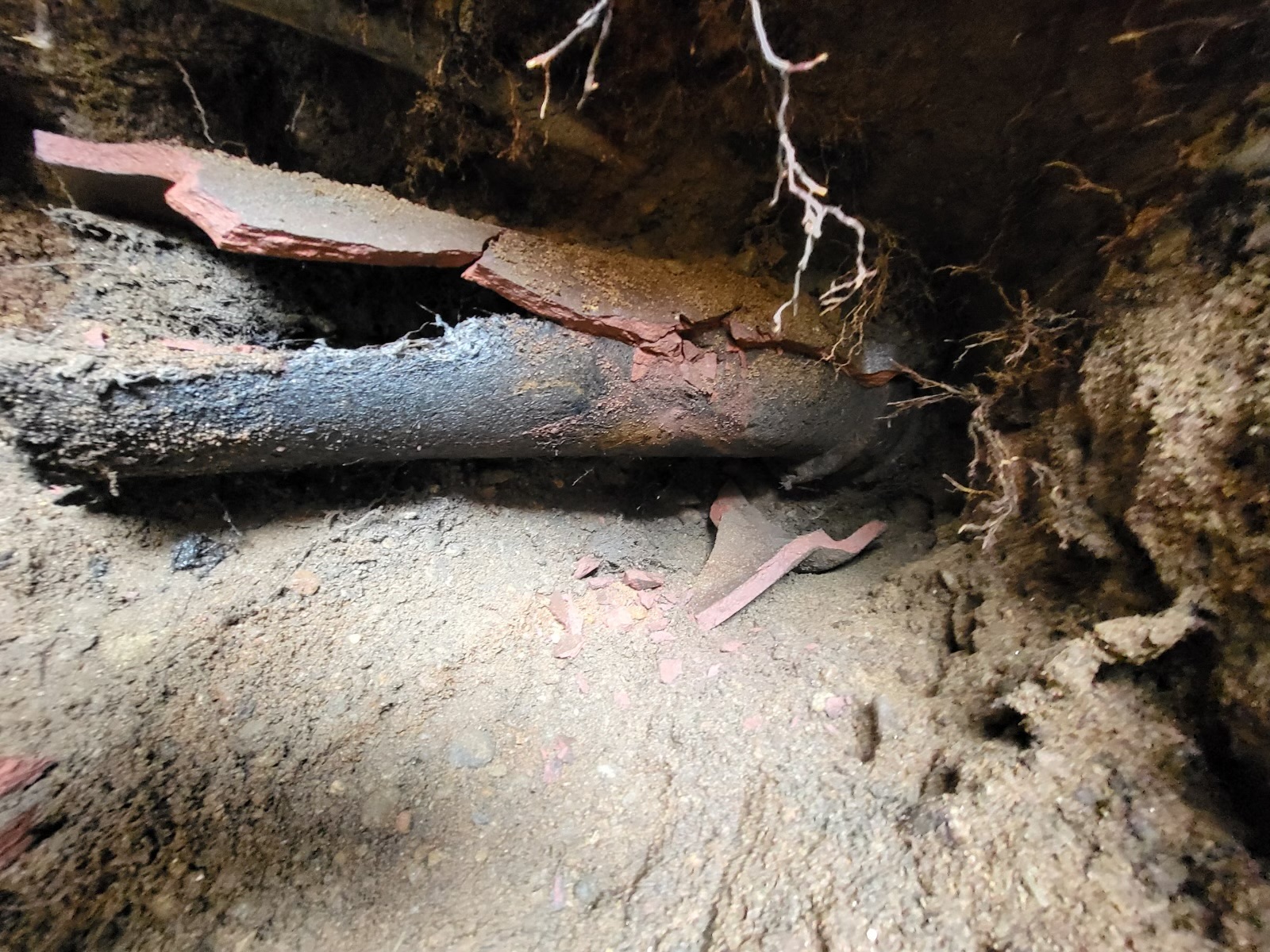
This is an example of a structural defect that requires a different plan from ordinary drain cleaning. Only an inspection can show whether a similar condition exists on your property.
If the overflow followed rain, do not assume the visible water has one source. London homes can face several flooding paths, including rainwater near the foundation, sump-pump problems, and sanitary-system issues. Our guide to basement flooding that happens only when it rains can help you describe the wider pattern after the immediate overflow has been addressed.
Keep this part simple when you are standing outside with a wet yard and a dozen other things on your mind.
If sewage has entered the home, start with our Ontario sewer-backup emergency guide for the broader health, cleanup, insurance, and documentation steps. This cleanout guide is about controlling the immediate outdoor warning and getting the right assessment started.
Wastewater at an outdoor cleanout can happen when the sewer path is restricted downstream from that access point. Possible contributors include roots, grease, wipes, other obstructions, damaged pipe, or a problem farther along the system. The overflow does not identify the precise cause or responsibility by itself, so stop water use and arrange safe assessment.
Do not remove, tighten, or replace a cap while water is present around the fitting. It may be holding back wastewater, and changing it can release more. Keep clear of the area and let a qualified professional assess the condition after the active problem is controlled.
No. The City is responsible for the sanitary main in the roadway, but it says homeowners are financially responsible for the full sanitary lateral, including the building sewer and Private Drain Connection. If there is active or recent basement flooding, the City can check the roadway main. That check determines whether the municipal main is functioning properly; it does not make the visible cleanout overflow a City responsibility automatically.[1]
Call Discount Drain at 519-451-8342 before anyone uses mechanical clearing, cutting, or high-pressure water jetting outside the building walls. If exterior clearing is needed, our team will confirm the required free sewer-safety inspection before equipment is used.[3]
No. A blockage caused by grease, wipes, or smaller root intrusion may be cleared without replacing the pipe. A camera may also find a crack, major offset, or collapse that calls for repair. The condition needs to be seen before anyone can make an honest recommendation.
[1] City of London: Sewers and wastewater
[3] Ontario Dig Authority: Call Before You Clear
Call Discount Drain today. Free sewer camera inspection available at no charge. Available 24/7 for emergencies.
Share this article
Have a drain or sewer problem? We offer free camera inspections and honest assessments.
London's Drain and Sewer Specialists Since 1970
Discount Drain serves homeowners and businesses across London and Southwestern Ontario. Family-owned since 1970, the company provides drain cleaning, sewer camera inspections, pipe repair and wet-basement services.